
This page contains affiliate links. Far Cornel may earn a commission if you buy through them, at no extra cost to you.
See the top-rated gear on Amazon →
Quick answer: For general boat work the AFTCO Taper-Tip Aluminium Gaff is the benchmark — fast, accurate and salt-proof. Choose the KUFA Sports stainless for a razor hook that won’t let go, the Promar Premier for a floating, well-priced option, the SANLIKE Telescopic when it must pack down for a kayak, and the BLUEWING Heavy-Duty for tuna, shark and marlin. Match the hook gap and handle length to your fish and your platform.
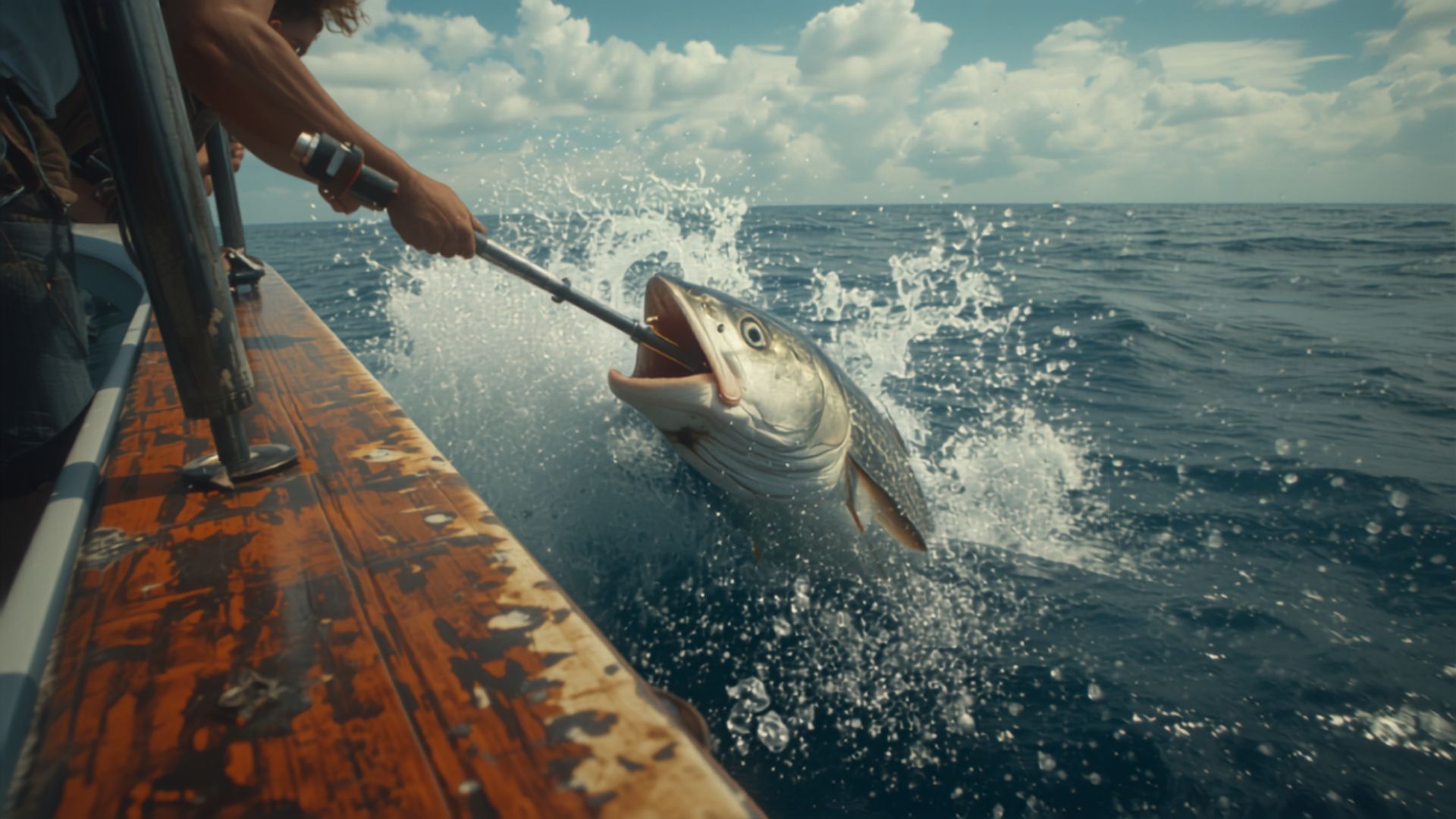
Every so often a fish turns up that a landing net simply cannot handle — too heavy, too long, or too green to fold into mesh without kicking free. That is the job a gaff exists for. A sharp hook on a firm handle lets you take hold of a serious fish and swing it aboard in one decisive move.
The gear either works or it doesn’t. A quality point buries and holds; a soft hook straightens on bone, a whippy handle robs you of control, and the fish you fought for slides off at the boat. The five gaffs below cover the spread, from a short fixed boat gaff for reef work to a telescopic that lives in a kayak hatch. Here is how they differ and how to pick the one that suits your fishing.
Quick Picks
- Best all-round: AFTCO Taper-Tip Aluminium Gaff — fast, accurate, salt-proof.
- Best stainless hook: KUFA Sports Stainless Steel Gaff — razor-sharp and strong.
- Best value: Promar Premier Series Gaff — floats and well priced.
- Best telescopic: SANLIKE Telescopic Fishing Gaff — packs down for the kayak.
- Best big-game: BLUEWING Heavy-Duty Gaff — long reach and a big hook.

How to Choose a Fishing Gaff
Start with one question: what is the biggest fish you realistically expect to land, and from where? A gaff is sized to the fish and the platform, not to your ambitions. Boat anglers chasing reef and pelagic fish want a stout fixed gaff; kayak and rock anglers trade some strength for a telescopic they can actually carry. The hook is the whole tool, and gap — the distance between point and shaft — needs to match your target: a narrow gap of a few centimetres suits bream and flathead, while a wide gap is essential for the deep shoulder of a big pelagic. Look for a needle or chemically sharpened point that bites on contact.
Handle length is a compromise. A short gaff of around a metre gives power and accuracy up close, which is what you want in a boat; a longer handle extends your reach from a high deck or the rocks but flexes more and is harder to aim. A fixed gaff is the strongest and the one to trust on genuinely large fish; a telescopic collapses for travel at the cost of some rigidity, so keep it for light and mid-size work. And here is the myth that loses fish — that you gaff wherever you can reach. You don’t. You take the shoulder just behind the head, from underneath, lifting through in one motion, never the tail where the fish still has all its power.
Aluminium is the standard handle for a good strength-to-weight balance, and a moulded or shrink grip stops the tool twisting in a wet palm at the worst moment. A galvanised or stainless hook resists the rust that quietly turns a sharp point blunt, so keep the point covered and sharp between trips, because a blunt gaff skates off scales instead of biting in. Some gaffs float if dropped, which is worth having where a lost gaff is gone for good. Spend on the hook and on the joint where head meets handle, since that is where a cheap gaff bends or pulls apart under load, and save on length and fancy finishes.
Where you place the gaff matters as much as the gaff itself. Aim for the shoulder — the meaty area just behind the head — never the belly, which tears out and ruins the fillets, and never a fish you intend to release. Reach the gaff over the fish and pull up and in toward the boat in one smooth motion rather than stabbing down at it, and wait until the fish is beaten and lying on its side; a wild swing at a green fish still full of fight is how gaffs end up in gunwales, nets and hands. Keep the point sticky-sharp and sheathed between trips, because a blunt gaff bounces off instead of biting.
The Gaffs
Check today’s prices on Amazon →
AFTCO Taper-Tip Aluminium Gaff
The benchmark, and for a reason. The tapered shaft is slim, so it moves fast and accurately through the water and you place the hook cleanly with less flailing. The marine aluminium is swaged for even strength end to end, anodised against corrosion, and fitted with a rugged non-slip grip. It is the gaff a lot of serious boat anglers settle on and never replace. If you want one quality gaff for general saltwater work, start here. Shop the AFTCO taper-tip aluminium gaff
KUFA Sports Stainless Steel Gaff
When you want a hook that simply will not let go, this is it. The stainless hook is seriously sharp and pierces tough scales with little effort, and the build handles everything from solid table fish up to large game. The grip stays comfortable and secure through a long fight, and it comes in a spread of hook sizes so you can match it to your target. A strong, sharp, durable choice for anglers who land serious fish. See KUFA Sports stainless steel gaff options
Promar Premier Series Gaff
The value pick that doesn’t cut corners. It is designed to float, the stainless hook resists corrosion and comes with a protective cover, and the soft non-slip grip keeps it secure in wet hands. It is light and easy to manoeuvre, with a range of lengths to suit most setups. If you want a reliable, well-priced gaff without paying premium money, this is the smart buy. Find the right Promar Premier Series gaff
SANLIKE Telescopic Fishing Gaff
The answer for tight storage and kayak fishing. It collapses to a compact length and extends when you need it, with a stainless hook, a non-slip handle and a lanyard to stop it going overboard. It is light enough to carry without thinking and packs neatly into a kayak or a boat locker. It trades a little rigidity for portability, so don’t trust it on genuine big game — but for a gaff that disappears when not in use, that is a fair deal. Price up the SANLIKE telescopic gaff
BLUEWING Heavy-Duty Gaff
Built for the fish that bend lesser gear. With long handle options and a big stainless hook, it is made for tuna, shark, marlin and other heavy game where reach and stopping power matter, and the fibreglass construction gives the stiffness to control a powerful fish without flex. It is more gaff than most inshore anglers need, so skip it if you fish light — but if you chase genuine big game, this is the tool for the job. Check current BLUEWING heavy-duty gaff prices
Comparison
| Gaff | Handle | Hook | Best for |
|---|---|---|---|
| AFTCO Taper-Tip | Aluminium, fixed | Tapered, sharp | All-round boat use |
| KUFA Sports Stainless | Aluminium, fixed | Razor stainless | Strong hook hold |
| Promar Premier | Aluminium, floats | Stainless, covered | Value and floating |
| SANLIKE Telescopic | Telescopic | Stainless | Kayak and storage |
| BLUEWING Heavy-Duty | Fibreglass, long | Big stainless | Big game |
Frequently Asked Questions
What size gaff hook do I need?
Match the hook gap to the fish. A gap of around five to eight centimetres covers most inshore and reef species; step up to ten centimetres or more for thick-bodied pelagic fish. Too narrow and the point cannot reach past the fish’s girth; too wide and you lose accuracy on smaller fish. If you fish for a real range of sizes, size the gap to the largest fish you expect to land.
How long should a boat gaff be?
On most boats a gaff of around one to one and a half metres is ideal, giving you power and control without excess flex. Go longer only if you fish from a high deck or need to reach down a steep side, and accept that a long handle is harder to aim precisely. From a kayak or the rocks, a telescopic gaff that extends when needed and stows when not is usually the better answer.
Where should you gaff a fish?
Aim for the shoulder just behind the head, coming up from underneath and lifting through in one motion. That part of the fish is solid and controls the head, so it cannot swim off the point. Avoid the tail and the belly, and never gaff through the body of a fish you plan to release. A clean shoulder shot holds best and does least damage to the meat.
Should I get a fixed or telescopic gaff?
A fixed gaff is the strongest and the one to trust on genuinely large fish, with nothing to fail under load. A telescopic gaff gives up some rigidity but packs down for a kayak or a boat with little storage, so it suits light and mid-size work. Plenty of anglers carry both — a solid fixed gaff for the serious fish and a telescopic as a backup that stows out of the way.
The Bottom Line
A gaff is cheap insurance against losing the fish of the season at the last moment. Match it to your quarry and your platform: a short, stout fixed gaff for boat work on solid fish, a longer handle for reach from height, and a telescopic if it has to pack away. Keep the point sharp and aim for the shoulders, then lift in one smooth motion, and the biggest fish of the day ends up aboard rather than back in the water.
Pair it with the rest of the kit that lands fish: our guides to the best fishing landing nets, best fishing pliers and tool kits, and the beginner fishing gear checklist round out the catch-handling setup.
Compare your options on Amazon →
