
This page contains affiliate links. Far Cornel may earn a commission if you buy through them, at no extra cost to you.
See the top-rated gear on Amazon →
Quick answer: For serious anglers the stainless Boga Grip is the buy-once benchmark, with a legendary scale. Kayak and wade anglers want The Fish Grip — floating, bright and cheap. The Piscifun adds a scale on a budget, the Rapala Floating Gripper is a light no-sink option, and the Berkley Big Game handles genuinely big fish. Buy stainless if you fish salt or chase larger species, composite if you want it light and floating for freshwater.
A fish at the side of the boat is at its most dangerous, to itself and to you. It thrashes just as you reach for the hook, and that is where fingers meet teeth, gill rakers and loose treble points, and where a hard-won fish shakes free at the worst moment. A fish grip takes the fight out of that moment.
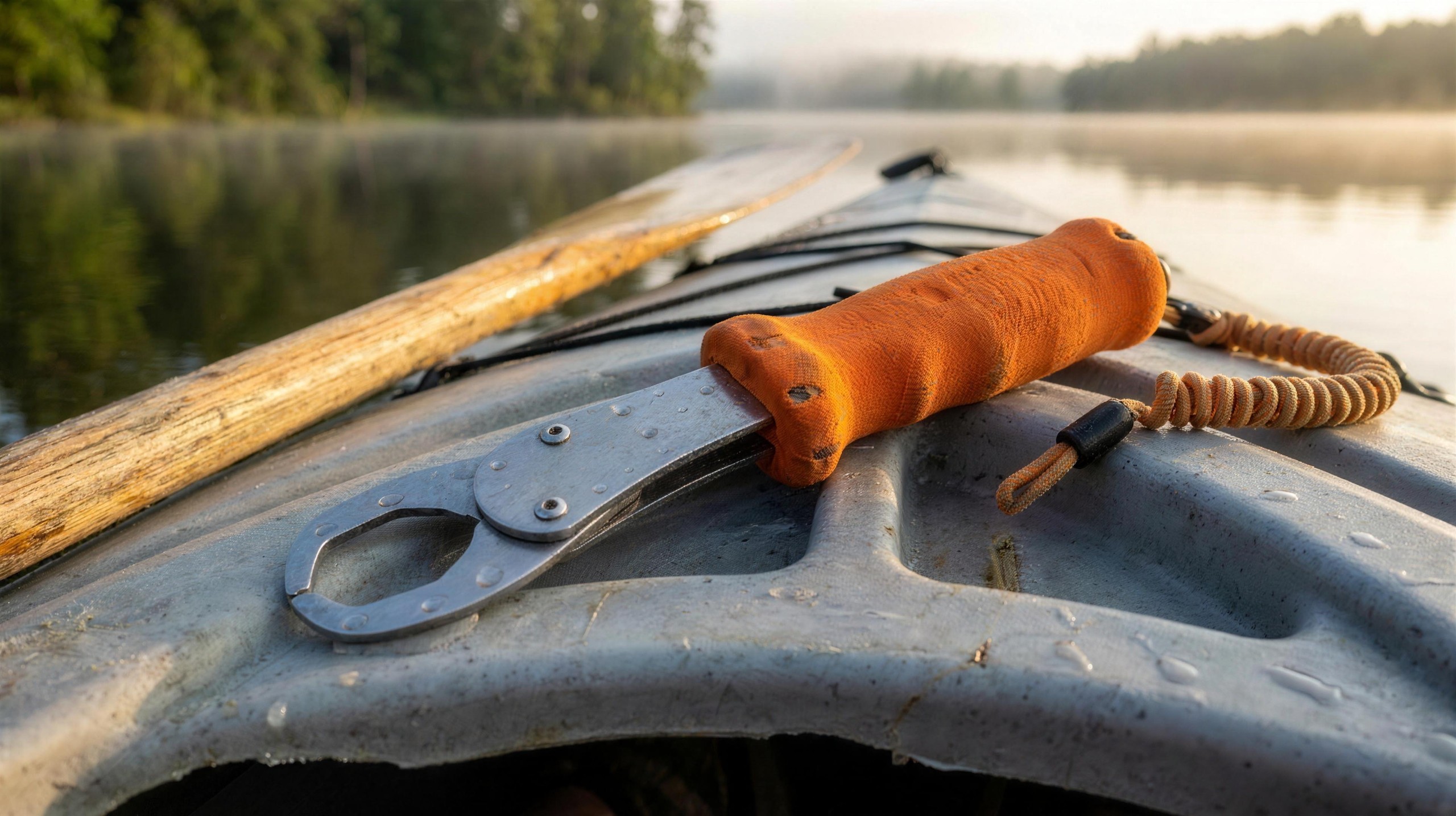
Clamp the lower jaw and the fish hangs still and controlled while you unhook it, weigh it, lift it for a photo or slip it back unharmed. The five grippers below range from a precision stainless tool with a built-in scale to a light floating composite you can leave clipped to a kayak. Here is how they differ and how to pick the right one for your fishing.
Quick Picks
- Best overall: Boga Grip — IGFA-certified stainless with a legendary scale.
- Best for kayaks: The Fish Grip — floating, light and brightly coloured.
- Best value with scale: Piscifun Fish Lip Gripper — corrosion-resistant, built-in scale.
- Best floating budget: Rapala Floating Fish Gripper — tough, light and it floats.
- Best for big fish: Berkley Big Game Lip Grip — no-nonsense stainless strength.

How to Choose a Fish Grip
One thing decides most of this choice: the size and teeth of what you catch, and whether you fish salt or fresh. A light composite grip is perfect for modest freshwater fish and shrugs off neglect; serious saltwater fish want a stainless tool with a strong jaw and a smooth lock that won’t corrode shut. Marine-grade stainless resists the rust that seizes cheaper metals, though it costs more and sinks if dropped. Composite and reinforced-plastic grips are lighter, they float, and they cost a fraction, but the jaws wear and can flex under a big, powerful fish.
The lock is what you actually rely on: a trigger or squeeze mechanism that opens and closes smoothly in one hand lets you secure a fish before it kicks loose, while a stiff latch costs you fish and patience. Some grips add a spring scale, which is handy for a quick weight — but here is the myth to drop: those built-in scales are not accurate enough to trust for anything that matters. They drift as the spring ages and are rarely certified, so treat a reading as a guide and weigh anything that really counts on scales you have checked.
The mistake that harms fish most is hanging a heavy one vertically by the jaw alone, which strains its spine and jaw — so support the body with your other hand and keep the lift brief, and the grip protects the fish instead of injuring it. A lanyard or floating body saves the tool the first time it slips from a wet hand, and a corrosion-proof split ring beats a cheap one that rust-stains everything near it. Spend on jaw material and a smooth, sealed lock, and save on built-in scales and colour options.
The Fish Grips
Check today’s prices on Amazon →
Boga Grip
The undisputed benchmark, and the tool record-hunters and guides rely on. Heavy-duty stainless makes it exceptionally tough and corrosion-resistant, and the integrated spring scale is accurate enough to be IGFA-certified for world records. The jaws rotate a full turn so a rolling fish can’t tear its own jaw, and the lock holds no matter how wet your hands. It is a buy-once tool that lasts a lifetime, and for the serious angler nothing else matches it. Find the right Boga Grip on Amazon.
The Fish Grip
The smart choice for kayak and wade anglers. Made from lightweight, durable high-impact plastic, its standout feature is simple: it floats. Drop it overboard with slimy hands after a trophy and it stays on the surface, usually in a bright colour that’s easy to spot. It locks to hold a fish securely or to stay shut in a pocket, and it comes in several sizes. Tough, affordable and forgiving of the inevitable overboard moment. Run your eye over the Fish Grip range on Amazon.
Piscifun Fish Lip Gripper
The value pick for anglers who want a grip and a scale in one. It has a corrosion-resistant body, a non-slip handle and a built-in scale that reads to a high maximum, all well below premium money. The scale is a convenient guide rather than tournament-accurate, but for handling fish safely and getting a rough weight without buying two tools it delivers strong value. A lot of function for the money. Look over the current Piscifun Fish Lip Gripper options on Amazon.
Rapala Floating Fish Gripper
A tough, no-nonsense floating option that punches above its plastic build. Shaped a little like channel-lock pliers, it has a ridged handle and a stop at the back to keep your grip, and plenty of anglers lip fish well over the weight you’d expect from a plastic tool. It is very light, easy to pocket on a PFD, and it floats. A reliable, affordable grip for kayak and shore anglers who want something simple that won’t sink. Check the latest Rapala Floating Fish Gripper range on Amazon.
Berkley Big Game Lip Grip
Built for big fish and no fuss. Berkley re-thought the shaft-style gripper with a pliable, textured rubber handle that grips better than foam and a wider actuating ring for easier opening. Stainless inside and out, it skips the scale in favour of bombproof durability — it will hold any fish you can lift with two arms. For anglers chasing genuinely big, powerful fish who want raw holding strength over gadgets, it is a great choice. Shop Berkley Big Game Lip Grip choices on Amazon.
Comparison
| Gripper | Material | Floats? | Scale | Best for |
|---|---|---|---|---|
| Boga Grip | Stainless steel | No | IGFA-certified | Serious anglers |
| The Fish Grip | Plastic | Yes | No | Kayak and wade |
| Piscifun | Corrosion-resistant | No | Built-in (rough) | Value with scale |
| Rapala Floating | Plastic | Yes | No | Floating budget |
| Berkley Big Game | Stainless steel | No | No | Big fish |
Frequently Asked Questions
Do lip grippers hurt or harm fish?
Used properly, a grip is gentler than wrestling a fish with dry hands, because it controls the head without squeezing the body or stripping the protective slime. The harm comes from misuse, mainly hanging a heavy fish vertically by the jaw, which can strain the jaw and spine. Keep the fish horizontal, support its weight with your other hand, and limit its time out of the water.
Are the built-in scales accurate?
They are good enough for a rough field weight but not for anything official. Spring scales built into a grip drift as the spring ages and are seldom certified, so a reading can be out by a fair margin. Use them for a quick idea on the water, and weigh any fish that genuinely matters on a separate set of scales you trust.
Stainless or plastic: which should I buy?
It comes down to where and what you fish. Stainless steel handles big, strong, toothy saltwater fish and resists corrosion, at a higher price and with no buoyancy if dropped. Composite grips are cheaper, lighter and float, which suits light freshwater fishing and kayaks, but they are not built for heavy fish. Buy stainless if you fish salt or chase larger species, and save with a composite for smaller work.
How do I look after a fish grip?
Rinse it in fresh water after every saltwater trip so the lock and any moving parts don’t seize, then let it dry before it goes away. A drop of light oil on the pivot keeps a metal grip working smoothly, and it pays to check the split ring and lanyard now and then. Simple care is the difference between a grip that lasts years and one that jams by next season.
What grip works best for kayak fishing?
A floating, tethered gripper is the safest kayak choice, because a dropped grip bobs on the surface instead of sinking and a short leash keeps it clipped to the yak within reach. Look at lightweight floating models and rubberised jaw grips such as the Bubba Fish Gripper, and skip heavy stainless scale grips on a kayak, since they sink fast if they slip out of a wet hand while you are leaning over the side.
The Bottom Line
A fish grip is a small tool that quietly improves every part of landing a fish, giving you control for a clean unhooking, an easy weigh and a safe release. Match it to your fishing: a floating composite for light freshwater sessions, and a stainless grip with a strong, smooth jaw for salt and bigger fish. Support heavy fish with a hand under the body rather than hanging them by the jaw, rinse the tool after salt, and it will look after your fish and your fingers for years.
Pair it with the rest of a responsible catch-handling kit: our guides to the best fishing landing nets, best fishing scales and measuring mats, and the beginner fishing gear checklist complete the setup.
Compare your options on Amazon →
