
This page contains affiliate links. Far Cornel may earn a commission if you buy through them, at no extra cost to you.
See the top-rated gear on Amazon →
Quick answer: For heavy rigged kayaks the Wilderness Systems Heavy Duty Kart is the strap-free standard. The Railblaza C-Tug is the rustproof cart that packs into a hatch, the YakAttack TowNStow adds twin kickstands for solo loading, the Suspenz Airless is built for soft sand and rough ground, and the Bonnlo Scupper Cart is the cheap strap-free pick for sit-on-tops. Choose your wheels for the ground you cross and your mount for how the hull sits.
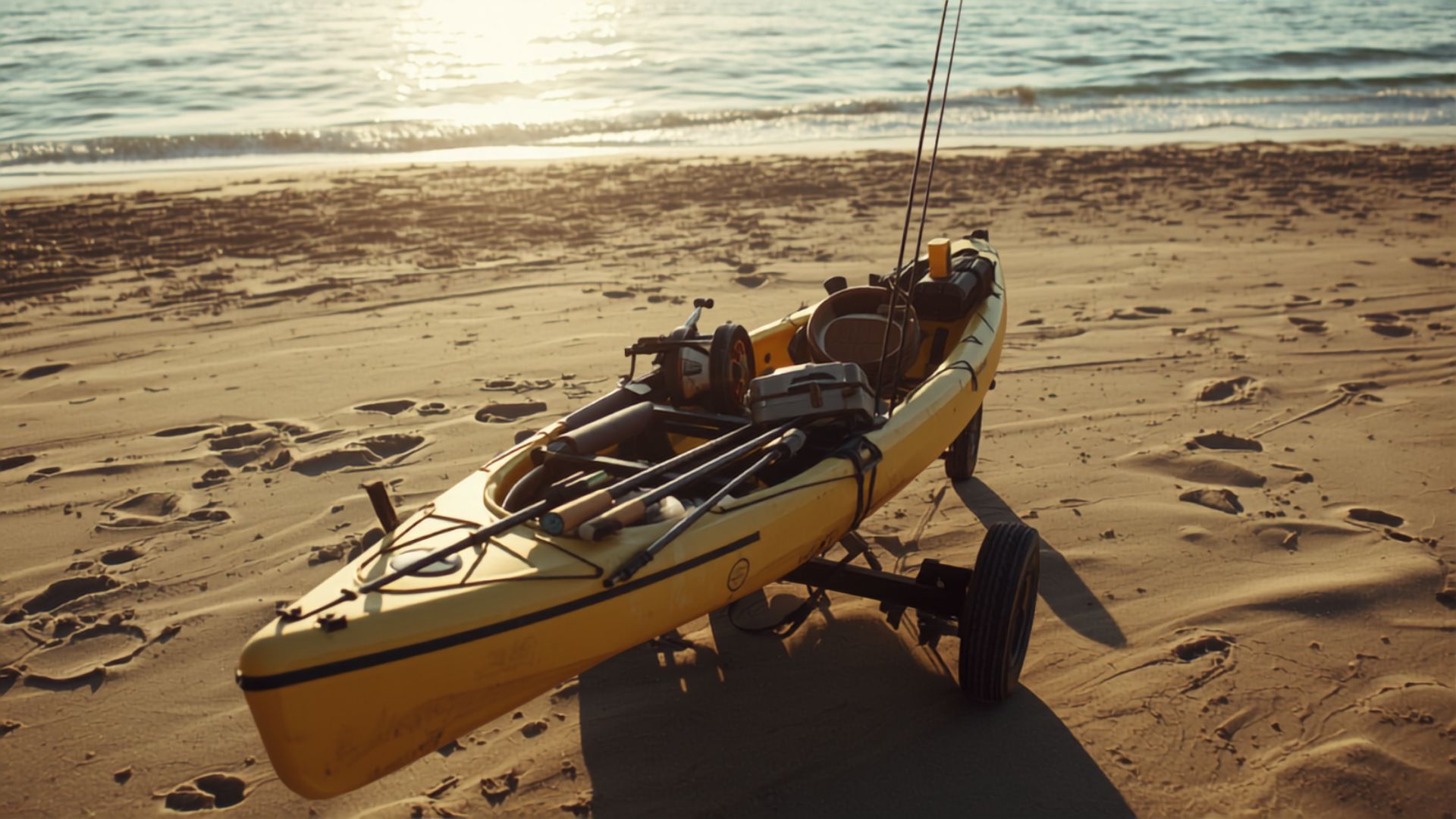
A fishing kayak loaded with rods, a cooler and tackle is a genuinely heavy thing, and the stretch from the car to the water is where a good day can begin with a strained back or a scarred hull. A cart turns that drag into a walk. Strap the hull onto a wheeled cradle, take the handle, and a load you could barely lift rolls along behind you across the car park, down the track and onto the sand.
The five carts below cover the main approaches, from a plug-in scupper cart to a strap-on flatbed and a fat-wheeled beach trolley. Two things decide which is right for you: the ground you cross and how your kayak sits on the cart. Here is how they differ and how to match one to your boat and your launch.
Quick Picks
- Best overall: Wilderness Systems Heavy Duty Kart — strap-free and hugely strong.
- Best compact: Railblaza C-Tug — no-metal, rustproof, packs into a hatch.
- Best bunk-style: YakAttack TowNStow BarCart — twin kickstands for solo loading.
- Best for soft sand: Suspenz Airless Beach Cart — overbuilt with balloon-tyre option.
- Best scupper cart: Bonnlo Scupper Hole Cart — strap-free, light and cheap.

How to Choose a Kayak Cart
Wheels are the decision that matters most, and here is the myth to kill first: that any wheels will do on sand. They will not. Wide, soft balloon wheels float over dry sand where narrow, hard wheels dig in and stall, so if you launch off a beach they are the whole point, not a luxury. Hard rubber or plastic wheels roll easily on concrete and are lighter and cheaper; pneumatic tyres cushion rough ground but can puncture and go flat between trips; solid airless wheels never deflate, at the cost of a firmer ride. Buy for the worst surface you regularly cross, not the easiest one.
Then the mount. Sit-on-top kayaks with scupper holes suit a scupper cart, whose posts drop straight into the hull for a fast, stable, strap-free fit — but only if your hull has suitable holes. Everything else needs a flat cradle or bunk cart that the hull rests on and straps down, which is more universal and will carry a canoe or gear too. Check the rated load carries your fully loaded kayak with margin to spare, not just the bare hull, and lean toward aluminium or marine-grade stainless, since plain steel left wet and salty rusts and seizes.
Think about where the cart lives, too. One that breaks down or folds flat will ride inside the hull or in a small boot, so you can carry it aboard and cart out at the far end; a rigid cart is sturdier but needs somewhere to go. A kickstand makes loading a one-person job, and a stainless pin beats a cheap clip that corrodes. Spend on wheels and a corrosion-proof frame, save on gadgets, and rinse the whole thing after salt — a seized axle is a cart you quietly stop trusting.
The Carts
Check today’s prices on Amazon →
Wilderness Systems Heavy Duty Kart
The benchmark universal cart, and for good reason. Rated to a serious load, it handles the heaviest rigged fishing kayaks, with a frame that adjusts to your hull width and a low centre of gravity that resists tip-overs. It needs no scupper poles or kickstand to stay solid, and offers height options for unusual hulls. Tough, stable and built to last, it is the cart a lot of serious kayak anglers settle on. For heavy boats, start here. See how the Wilderness Systems Heavy Duty Kart options stack up on Amazon.
Railblaza C-Tug
The compact, rustproof favourite. Its no-metal construction means you can leave it in a hot, salty vehicle without a hint of corrosion, and it disassembles to pack into a kayak hatch — so you carry it aboard and wheel out at the far end. It is light, versatile and well-built, with optional sand wheels for soft ground. For anglers who want a durable cart they can stow and forget about, the C-Tug is hard to beat. Look over the current Railblaza C-Tug options on Amazon.
YakAttack TowNStow BarCart
A clever bunk-style cart built around fishing kayaks. With a strong capacity, configurable bunks that sit parallel or across the hull, and twin kickstands to hold it upright while you load solo, it is designed for the reality of getting a heavy boat to the water alone. Bright touchpoints make adjustment easy, and it breaks down to stow on the kayak or in the vehicle. A thoughtful, well-made cart for the serious kayak angler. Browse the current YakAttack TowNStow BarCart listings on Amazon.
Suspenz Airless Beach Cart
The overbuilt choice for rough ground and soft sand. Suspenz have a reputation for carts that simply don’t quit, and this one carries a full-size, fully rigged kayak over uneven terrain on sturdy airless wheels, with oversized balloon tyres available for soft sand. Bunk supports rotate to carry the boat lengthwise or across, and a four-way strap system locks it down tight. Heavier and pricier than some, but bulletproof. For dunes and rough trails, it shines. Compare Suspenz Airless Beach Cart options on Amazon.
Bonnlo Scupper Hole Cart
The simple, strap-free answer for sit-on-top kayaks. Poles plug up through the scupper holes to hold the kayak with no straps to fuss with, and the width adjusts over a wide range to fit most sit-on-tops and their varying hole positions. Made from light aluminium, it still handles most kayaks, with removable foam pads to protect the hull. Affordable and quick to use — just check your hull has suitable scupper holes first. Shop Bonnlo Scupper Hole Cart choices on Amazon.
Comparison
| Cart | Mount | Wheels | Best for |
|---|---|---|---|
| Wilderness Systems HD | Bunk / platform | To suit | Heavy boats |
| Railblaza C-Tug | Platform | Hard + sand option | Compact and rustproof |
| YakAttack TowNStow | Bunk | To suit | Solo loading |
| Suspenz Airless | Bunk | Airless / balloon | Soft sand, rough ground |
| Bonnlo Scupper | Scupper poles | Hard | Sit-on-tops |
Frequently Asked Questions
What wheels are best for soft sand?
Wide balloon wheels — the fat, low-pressure kind — are the answer for dry sand, because they spread the load and roll over the surface instead of cutting into it. Narrow or hard wheels sink and drag, turning a short beach walk into hard labour. If you launch mainly off sand, prioritise big soft wheels over everything else; for firm ramps and paths, smaller hard wheels are lighter and perfectly fine.
Are scupper carts better than strap-on carts?
Neither is better outright, they simply suit different kayaks. A scupper cart plugs into the scupper holes of a sit-on-top for a quick, strap-free, very stable fit, but only if your hull has suitable holes. A strap-on cradle cart works with almost any kayak or canoe and carries a loaded hull well, at the cost of a slower set-up. Choose by what your boat is built to take.
Pneumatic or airless wheels?
Pneumatic tyres give a softer ride over rough, rutted ground but can puncture and slowly deflate between trips, which has a habit of surfacing at the worst moment. Airless or solid wheels never go flat and need no upkeep, though they ride a little harder. If you value zero maintenance, go airless; if you cross rough ground often and will keep an eye on pressures, pneumatic tyres are more comfortable.
How do I stop my cart rusting?
Start with an aluminium or marine-grade stainless frame rather than plain steel, and favour a stainless pin over a cheap clip that corrodes. Then rinse the whole cart in fresh water after any trip near salt, let it dry, and check the axle turns freely now and then. A seized axle or a rusted frame is a cart you quietly stop trusting, and a quick rinse avoids it.
The Bottom Line
A kayak cart is one of those buys you only regret not making sooner, because it saves your back and your hull on every single trip. Choose it around your ground and your boat: fat balloon or airless wheels for sand, hard wheels for concrete, a scupper cart if your kayak takes one and a padded cradle if it doesn’t. Check the load rating, keep it corrosion-proof, rinse off the salt, and getting to the water stops being the hard part of the day.
Pair it with the rest of a sorted kayak setup: our guides to the best fishing kayaks, best kayak anchors and trolleys, and the best kayak life jackets and PFDs help you rig the rest of your kayak fishing kit.
Compare your options on Amazon →
