
This page contains affiliate links. Far Cornel may earn a commission if you buy through them, at no extra cost to you.
See the top-rated gear on Amazon →
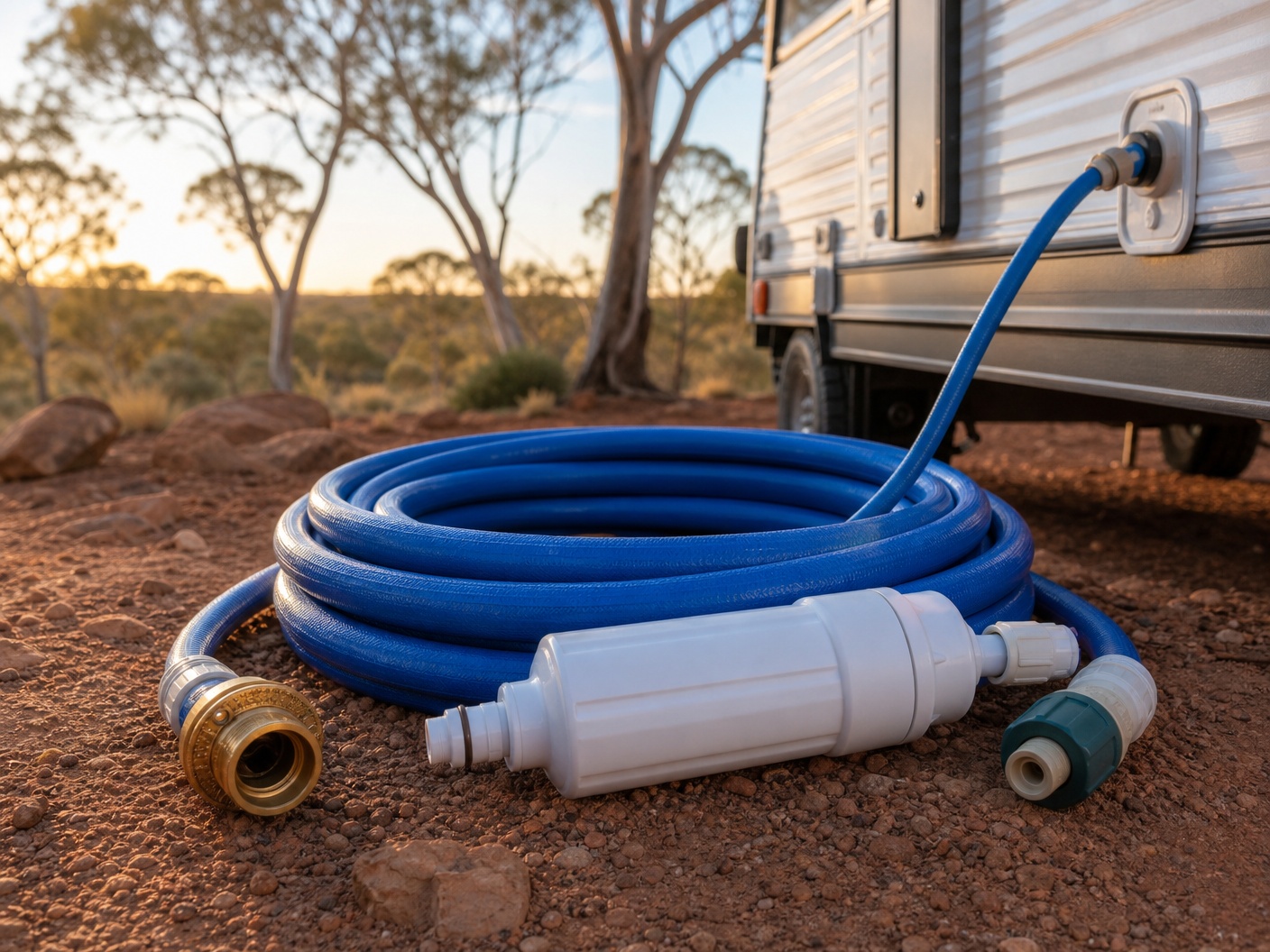
Quick answer: The safe setup is a food-grade drinking-water hose plus filtration matched to where you fill. A simple inline sediment-and-carbon filter covers most park water, while a dual-stage canister system suits long off-grid trips and questionable sources. Add a pressure limiting valve to protect your plumbing and brass fittings that will not crack. Never fill from a garden hose. Camec, Hydro Flow and Aquagreen are common names to look at.
The water going into your van tanks deserves more thought than it usually gets. Fill points vary wildly, from clean town water to a tank or a bore that tastes of the ground it came from, and what runs through a cheap hose picks up flavour and worse on the way. Get the hose and the filter right and every glass tastes clean; get them wrong and you spend a trip drinking warm plastic.
The single biggest mistake is reaching for the garden hose off the shed wall. Standard garden hoses are not made for drinking water and can leach chemicals, especially after baking in the sun, leaving that unmistakable hose taste behind. A proper setup is a food-grade hose, the right filter for your sources, and a couple of small extras. Camec, Hydro Flow and Aquagreen all make gear for exactly this.
Quick Picks
- Best first buy: a food-grade drinking-water hose to replace the garden hose.
- Best for everyday trips: a compact inline sediment-and-carbon filter.
- Best for off-grid: a dual-stage canister system for the worst sources.
- Best plumbing saver: a pressure limiting valve for the tap.
- Best reliability fix: brass click-on fittings that will not crack.

How to Choose a Water Hose and Filter
Begin with the hose, because it touches every drop before the filter does. It must be certified for drinking or potable water, ideally UV-stabilised so it does not degrade in the sun, and stored capped at both ends so dirt stays out. This is the myth to bust: a garden hose is not a cheap substitute. It can taint the water with taste and chemicals, so the hose matters as much as the filter.
Then match the filtration to where you fill. The micron rating tells you the particle size a filter traps: a 5-micron sediment stage catches dirt, rust and sand, while a 1-micron carbon block tackles chlorine taste and finer contaminants. For clean park taps a single inline filter is plenty, but if you draw from tanks or a bore, a lower micron rating and a two-stage setup earn their keep. Check the flow rate too, ideally around 10 to 15 litres a minute, so filling a big tank does not take all afternoon.
Finally, sort the small parts that make it reliable. Brass click-on fittings resist cracking far better than plastic ones and survive the connect-and-disconnect cycle you repeat at every stop. A pressure limiting valve on the tap protects your van’s plumbing from the surprisingly high pressure some taps deliver. And plan storage: flat hoses on a reel and impact-resistant filter housings pack down and cope with corrugations.
The Water Hoses and Filters
Check today’s prices on Amazon →
Food-grade drinking-water hose
Everything starts here, and it is the cheapest upgrade that makes the biggest difference. A food-grade hose from Camec or Hydro Flow is made from non-toxic, drinking-water-safe material that will not leach chemicals or leave a plastic taste the way a garden hose does. Choose a UV-stabilised one so it survives long stints in the sun, and keep the ends capped and connected in storage to keep dirt out. Buy this before you buy any filter, because a clean filter fed through a dirty hose is a waste. Compare food-grade water hose on Amazon
Inline water filter
For everyday park water, a compact inline filter is all the filtration you need. It clips onto the hose, sets up in seconds and combines sediment filtration with activated carbon to pull out dirt, chlorine and off tastes, which covers the majority of park and town water. The honest limits are a lower flow rate and a shorter life than a big canister system, and you replace the whole unit rather than a cartridge. For weekend trips and clean sources, it is the easy, tidy pick that stores in a drawer. Check the latest inline water filter on Amazon
Dual-stage canister system
For long off-grid trips and genuinely questionable water, a dual-stage canister system is the gold standard. Two housings run in series: a sediment cartridge first to catch dirt, rust and sand, then a carbon block to handle chemicals and finer impurities, which gives cleaner water and a higher flow than an inline unit. You can tailor the cartridges to your sources and simply swap the exhausted one. The trade-offs are more setup, more space and a mounting spot, so it suits serious tourers rather than the odd weekend away. Browse dual-stage water filter on Amazon
Pressure limiting valve
This is the cheap part that saves an expensive repair. Tap pressure at some sites is high enough to stress or split your van’s plumbing and blow fittings, and a pressure limiting valve fitted at the tap, ahead of your hose and filter, caps it at a safe level. It takes seconds to fit and quietly protects everything downstream for the life of the van. Anyone who has come back to a flooded floor from a burst line will fit one without argument. Don’t skip it just because the fault is rare. Shop pressure limiting valve on Amazon
Brass fittings and connectors
The fittings are the bit that fails first if you cheap out. You connect and disconnect at every stop, and plastic click-ons crack and weep under that cycle and under pressure, especially once the sun has made them brittle. Brass click-on fittings and connectors cost a little more and last for years, sealing cleanly trip after trip. Standardising on one fitting type across your hose, filter and taps also means everything joins without a bag of adaptors. It is a small spend that stops the annoying drips. See brass fittings and connectors options on Amazon

Comparison
| Feature | Inline filter | Dual-stage system |
|---|---|---|
| Best for | Weekends, clean park water | Long off-grid trips, poor sources |
| Filtration | Good, basic sediment and carbon | Excellent, customisable stages |
| Flow rate | Moderate to low | High |
| Maintenance | Replace the whole unit | Swap individual cartridges |
Frequently Asked Questions
Why filter park water into the van?
Tap quality at sites varies, and a filter removes sediment, the chlorine taste and some contaminants before the water reaches your tank. It protects both the taste and your plumbing, and it stops grit building up in the system. Even at a clean tap, a basic inline filter is cheap insurance for the way water tastes out of the van.
Inline filter or dual-stage system?
A single inline sediment-and-carbon filter on the fill hose handles the common issues and suits weekends and clean sources. A dual-stage canister system filters finer and flows faster, which pays off on long off-grid trips or when you draw from tanks or a bore. Match it to how fussy you are about taste and how variable your water is.
Do I need a drinking-water-safe hose?
Yes. Use a hose rated as food or drinking-water safe, because a garden hose can taint the water with taste and leached chemicals, especially after sitting in the sun. The hose matters as much as the filter for clean tank water, so it is the first thing to replace if you are still using something from the shed.
How often should I replace the filter?
Follow the maker’s guidance, but most carbon filters want replacing every 6 to 12 months regardless of use, since they can harbour bacteria once spent. Flush a new filter for a few minutes before it feeds your tank to clear loose carbon dust, and if you store the van, remove and dry the cartridges first.
The Bottom Line
Clean water is one of the simplest things to get right and one of the easiest to ignore. Start with a food-grade drinking-water hose, add an inline filter for everyday park water or a dual-stage system for long off-grid trips, and protect it with a pressure limiting valve and brass fittings that will not crack. Camec, Hydro Flow and Aquagreen cover the range. Flush new filters, replace them on schedule, and never fill from a garden hose.
For the rest of your touring water and washroom setup, see our guides to vehicle-mounted water tanks, portable water filters, and privacy ensuite tents.