
This page contains affiliate links. Far Cornel may earn a commission if you buy through them, at no extra cost to you.
See the top-rated gear on Amazon →
Quick answer: Most anglers are best served running two bags: a small roll-top pouch that lives sealed around a phone, keys and wallet, and a 10 to 20 litre roll-top for the day’s layers and lunch. Step up to a welded dry backpack if you walk in, a heavy PVC sack for touring, and add a clear phone pouch to double-bag anything electronic. Match the fabric to how rough your fishing gets.
Water finds everything eventually. It seeps through a zipped pocket, wicks up a rolled towel, and pools in the bottom of a hull exactly where your phone happens to be. A dry bag is cheap insurance against a good day turning expensive, yet most anglers buy the wrong size, trust the seal too far, or grab the cheapest option and wonder why the contents still come out damp.
The label rarely tells the whole story, because a bag that shrugs off rain and one that survives going overboard are built very differently. The features that decide it are the fabric, the closure, the seams and the size, roughly in that order. Get those right and everything else is comfort and colour. Here is how to read them.
Quick Picks
- Best for valuables: a small roll-top pouch for phone, keys and wallet.
- Best all-rounder: a 10 to 20 litre roll-top dry bag.
- Best for walking in: a welded-seam dry backpack.
- Best for touring: a heavy PVC tarpaulin dry sack.
- Best fail-safe: a clear waterproof pouch to double-bag electronics.

How to Choose a Dry Bag
Start with the fabric, because it sets the price and the lifespan. Fabric is quoted in denier, a measure of yarn thickness, and heavier is not automatically better. A 500 to 840 denier PVC tarpaulin is abrasion-resistant and cheap, but stiff and heavy, and it can crack in the cold as it ages. A TPU-coated nylon of 200 to 400 denier is lighter, more flexible and usually tougher at the folds, where bags fail first, though it costs more. Whatever the fabric, the coating that does the waterproofing sits inside, so a scuffed outer is cosmetic while a cracked inner coating ends the bag.
Then the closure, and the myth worth killing: waterproof does not mean submersible. A roll-top rolled down tight three or four times and buckled keeps out rain and brief splashes, and that is all most listings promise. A bag that survives going fully under needs welded seams and enough rolls to trap air, and the label rarely spells out which you are buying. If a capsize is on the cards, read for welded seams and a stated submersion rating, not just the word “waterproof” in the title.
Finally, size it to the job. A bag stuffed to the brim only gives you one weak fold and leaks; leave a good hand’s width of empty fabric so you can roll it properly. On a typical day trip a 10 to 20 litre bag is the sweet spot, with a small sealed pouch inside it for the things that must stay dry no matter what.
The bag is only as waterproof as the way you close it. A roll-top needs at least three firm folds before you clip it — one or two will weep the moment it goes under, which is why most “leaky” dry bags are really a rolling problem, not a fault in the bag. Squeeze the air out before you roll so it does not balloon and force the seal open, and never fill it to the brim or you lose the folds you need. Keep the difference between water-resistant and submersible in mind, too: a splash-proof bag shrugs off spray and rain but is not built to survive going overboard, so anything irreplaceable belongs in a fully welded roll-top sack.
The Dry Bags
Check today’s prices on Amazon →
Small roll-top pouch
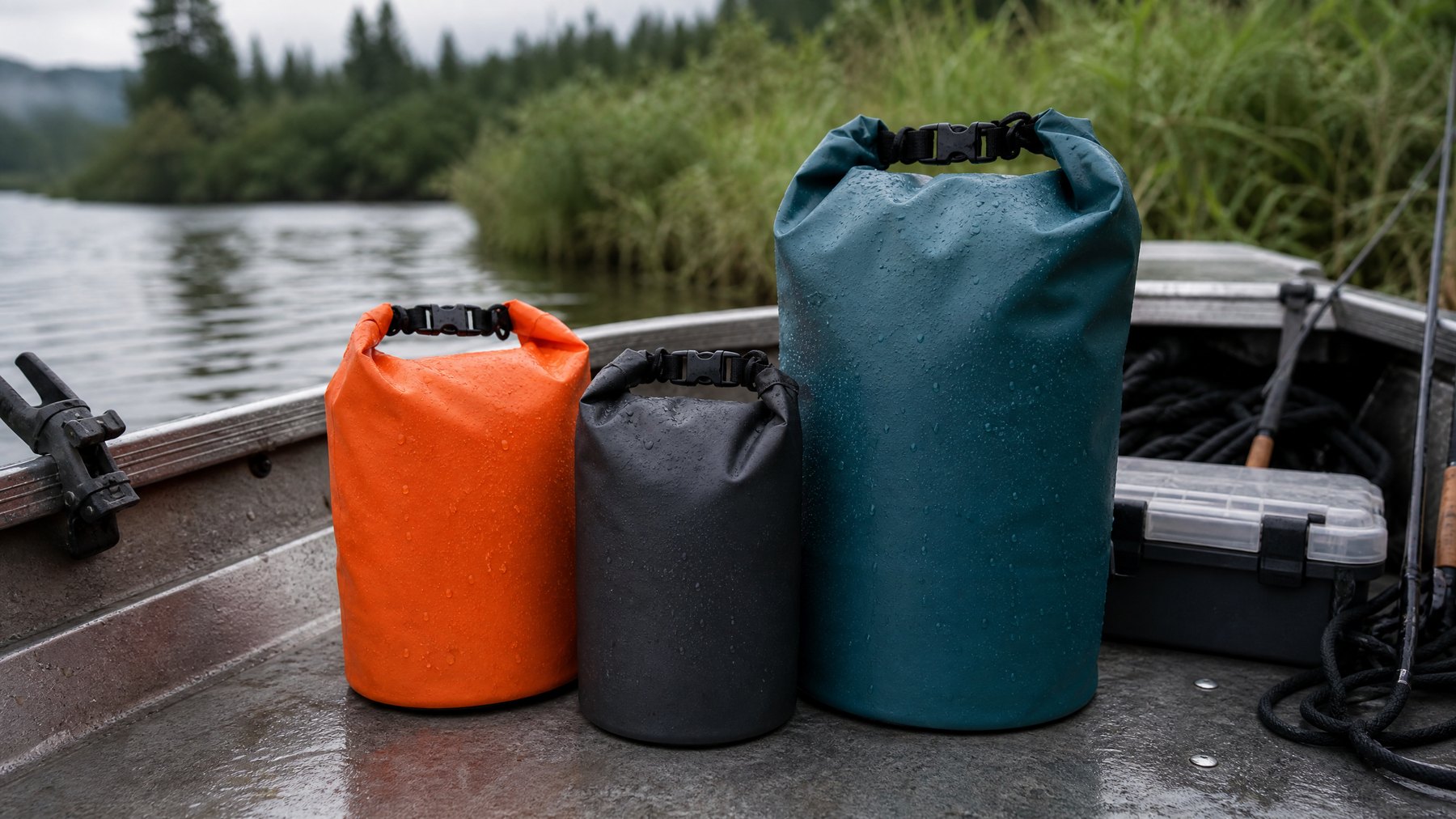
The two to five litre pouch is the one everyone should own, whatever else they carry. It swallows a phone, keys, wallet and a small first aid kit, seals with a couple of rolls, and clips to a fixed point so it cannot wander off the deck. Kept part-filled it traps enough air to float, so if it does go over the side you are chasing it rather than kissing it goodbye. Buy a bright colour and you will spot it in a cluttered hull or a dark hatch. Compare small roll-top dry pouches
Mid-size roll-top dry bag
A 10 to 20 litre roll-top is the everyday workhorse. It holds a spare fleece, a rain jacket, lunch and a towel, keeps the muddy stuff away from the clean, and rolls down small when it is half empty. This is the size most anglers reach for first, and the one that quietly does the most jobs across a season. Look for a stiffened rim that makes a clean, uniform roll easy, because a neat roll is what actually keeps the water out. Check current mid-size roll-top prices
Welded dry backpack
When you walk in to reach the water, a dry bag with a proper harness changes the trip. Padded shoulder straps, a sternum strap and a back panel let you carry 20 to 30 litres of gear comfortably over distance, hands free for a rod and the scramble down to the bank. Welded rather than stitched seams are what make it genuinely dry, so check for those and for a roll-top or waterproof zip closure. It doubles as your kayak-to-shore bag on longer missions. See what welded dry backpacks cost
Heavy PVC tarpaulin sack
For touring and boat work where gear takes a beating, a heavy 40 litre-plus PVC sack is built to be thrown around. The thick tarpaulin fabric shrugs off dust, grit and rough decks, swallows spare layers, wet-weather gear and bulky kit, and keeps driving rain out of everything strapped to a load. It is heavy and stiff, which is the point, so it lives in the vehicle or the boat rather than on your back. Store it loosely rolled so the cold does not crack the folds. Browse heavy PVC tarpaulin sacks
Clear waterproof phone pouch
The cheapest bit of insurance here is a second layer for the gear you cannot replace. A clear pouch or a hard waterproof case around a phone, camera or a set of keys means one compromised seal does not cost you the lot, and a clear front lets you use a touchscreen without unsealing it. Slip it inside your main dry bag and you have belt and braces for the electronics that always seem to find water first. Test any touchscreen through the window before you trust it. Look at clear waterproof phone pouches

Comparison
| Type | Capacity | Fabric | Best for |
|---|---|---|---|
| Small pouch | 2 to 5 litres | Light TPU nylon | Phone, keys, wallet |
| Roll-top bag | 10 to 20 litres | TPU nylon or PVC | Day layers and lunch |
| Dry backpack | 20 to 30 litres | Welded nylon | Walking in, hands free |
| PVC tarpaulin sack | 40 litres and up | Heavy PVC | Touring and boat loads |
| Phone pouch | Under 1 litre | Clear TPU | Double-bagging electronics |
Frequently Asked Questions
What size dry bag do I need?
A 10 to 20 litre bag covers a typical day out — it holds layers and lunch, with a small sealed pouch inside for a phone and keys. Two sizes beat one, because it keeps the things that must stay dry separate from the bulk and easy to find in a hurry.
Roll-top or waterproof zip?
Roll-tops are the most reliably waterproof and the cheapest, and they forgive rough treatment. Waterproof zips are quicker to open and neater, but they cost more and need care to keep sealing. For fishing where a soaking is likely, a roll-top is the safer default.
Are dry bags fully submersible?
Not automatically. Most keep water out from spray, rain and brief dunks, but full submersion needs welded seams and a stated rating, so check the label if a capsize is possible. Whatever the bag, it only seals if you roll the top three or four times under real tension.
Will a dry bag float if I drop it in?
A part-filled roll-top traps air and floats, which is why it pays not to stuff it to the brim and to leave some empty fabric before you roll. Clip it to a fixed point anyway, because a floating bag still drifts away faster than you can reach it.
Which dry bag brands are worth looking at?
For roll-top bags that do most jobs well, Sea to Summit and Exped are the reliable names, with tough welded seams and honest sizing. Earth Pak is the value pick when you want a big PVC bag or dry backpack without paying a premium, and OverBoard makes larger welded duffels that suit bedding and shared kit for a group. For a phone or wallet, a cheap floating pouch from any of these brands is worth having, but treat it as splash insurance rather than a bag you would trust on a full capsize.
The Bottom Line
Buy for your worst realistic day, not your calmest. A small sealed pouch for valuables and a 10 to 20 litre roll-top cover most fishing, with a welded backpack if you walk in and a heavy PVC sack for touring. Do not overpay for capacity you will rarely fill, double-bag anything electronic, and give the roll the seconds it needs to seal.
Round out your setup with our guides to the best fishing backpacks, the best fishing tackle boxes, and our beginner fishing gear checklist to keep the rest of your kit organised and protected.