
This page contains affiliate links. Far Cornel may earn a commission if you buy through them, at no extra cost to you.
See the top-rated gear on Amazon →
Quick answer: For most campers the best multi-tool is a full-size pliers-based one with locking blades and drivers — the reliable ones come from names like Leatherman, Victorinox and Gerber, and handle gear repairs, food prep and the small jobs a trip throws up. Drop to a compact keychain tool if weight is everything, or add a dedicated lock-blade folding knife when you cut a lot. Skip the gadget-packed tools full of blades you will never use — the bulk outlasts the novelty.
A camping multi-tool is the thing you forget about until a tent pole splits, a ration pack refuses to open or a screw works loose on the stove, and then it is the most useful object in the pack. Folding pliers, a blade, a saw and a few drivers in one palm-sized unit cover a surprising share of camp repairs and chores. The skill in buying one is resisting the gadget count and choosing the handful of tools you will genuinely reach for.
The category spans everything from a keychain gadget the size of a thumb to a full pliers-based tool that could rebuild half a campsite. Some are blade-first, in the Swiss Army mould, and some are plier-first in the classic multi-tool shape, and the right one comes down to what you fix and how much weight you will carry to do it. Below is how to judge quality and usefulness, then five styles that suit different trips and pockets.
It helps to be honest about how you will actually use it. A car camper can carry a heavy, do-everything tool without noticing, while a hiker counting grams wants a light tool with only the essentials. The best multi-tool is the one you will keep on you, so match the size and tool set to the trips you take rather than to the longest feature list on the box. The picks below span that whole range.
Quick Picks
- Best overall: a pliers-based multi-tool with locking blades and drivers
- Best budget and lightest: a compact keychain multi-tool
- Best for cutting tasks: a lock-blade folding camp knife
- Best for camp chores: a tool with a saw and sprung scissors
- Best heavy-duty: a full-size tool built for real repairs

How to Choose a Camp Multi-Tool
Start by choosing tools you will use, not the highest function count. A tool advertising thirty functions usually hides a few genuinely useful ones among a pile of gimmicks that add weight and cost. For camping, the workhorses are the pliers, a sharp knife, a saw, scissors and a can or bottle opener, with a file and a couple of drivers to round it out. Everything beyond that is a bonus you will rarely touch. Pick the tool built around the four or five things you actually do at camp, and ignore the marketing tally.
Then look hard at how it is built and how it works in the hand. Locking blades and tools are a real safety feature, since an unlocked blade can fold onto your fingers under load. Outside-accessible tools you can open without unfolding the pliers make quick jobs far easier, and a one-hand-opening blade genuinely helps when your other hand is busy. Good stainless steel holds an edge and resists rust, while cheap tools use soft steel that bends and pivots that go sloppy. A solid warranty is a fair sign a maker trusts its own build.
Finally, weigh size against portability and be realistic about brands. A full-size tool does more but rides heavy, while a compact one is the tool you will always have with you. This is where to spend and where to save: buy a mid-range tool from a proven maker with the tools you use and a long warranty, and save by skipping thirty-function novelties. The common mistake is a cheap, soft-steel tool with a dozen gimmicks, which bends at the first real job and rusts by the second trip.
The Multi-Tools
Check today’s prices on Amazon →
The all-round pliers-based multi-tool
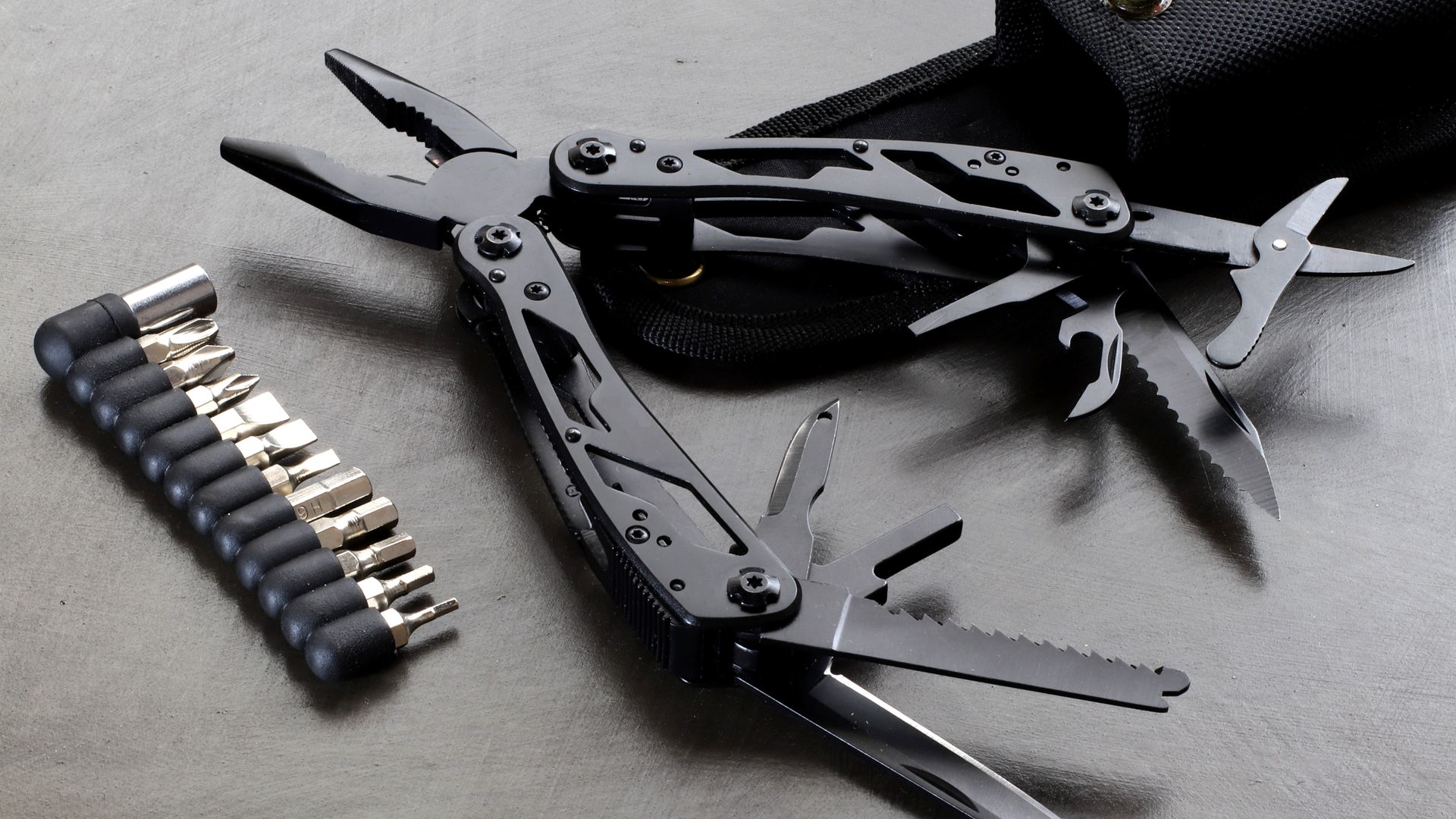
The classic camp workhorse: needle-nose pliers with wire cutters, a locking blade, flat and Phillips drivers, a can and bottle opener, often a file, all folding into a palm-sized body. A Leatherman Wave+ or Wingman, a Gerber Suspension or a chunky Victorinox multi-tool covers the widest spread of jobs, which is why it suits most campers as a single do-everything tool. Look for outside-opening blades you can reach without unfolding the pliers, and a grip that stays comfortable when you are really leaning on the jaws. Find the right pliers-based multi-tools on Amazon.
The compact keychain multi-tool
When you want a tool that is simply always there, a keychain unit is hard to beat. A Leatherman Micra or Style, a Victorinox Classic SD or a Gerber Dime packs a small blade, scissors, driver, opener and tweezers into something the size of a car key and weighs almost nothing. It will never replace full-size pliers, but for trimming, tightening and quick fixes it is the tool you actually use, purely because it is on the keys in your pocket rather than in a bag back at the tent. Run your eye over the keychain multi-tools range on Amazon.
The lock-blade folding camp knife
Sometimes you just need to cut properly. A dedicated lock-blade folder gives you a longer, stronger edge than any multi-tool blade, which makes food prep, cord work and general slicing faster and safer. Pair a good folder — an Opinel, a Victorinox Hunter, a Kershaw — with a compact multi-tool and between them you cover almost everything. Choose a lock you can work one-handed and a stainless blade you can touch up with a cheap pocket stone in the field. Check the latest folding camp knives range on Amazon.
The multi-tool with a saw and scissors
If your camp chores lean toward processing kindling, trimming branches around a pitch or cutting endless packaging, look for a tool with a proper folding saw and sprung scissors — the Leatherman Signal and Surge, and several Victorinox models, are built around exactly this. A real saw turns an awkward two-handed chore into a quick one, and good spring-loaded scissors get used far more than anyone expects. The main compromise is a shorter primary blade, so this type shines for tinkerers more than for heavy cutters. See current multi-tools with a saw prices on Amazon.
The heavy-duty full-size multi-tool
For real repairs — vehicle fixes, stubborn bolts, thick fencing wire — a full-size tool like a Leatherman Surge or a SOG PowerLock gives you longer handles, more leverage and jaws that will not flex or slip. It is heavier and bulkier, so it lives in the vehicle or a pack rather than a pocket, but when a job actually needs muscle you will be glad of it. Don’t buy this as your everyday carry: most people find it too big to bother with and reach for something smaller. Check current heavy-duty multi-tools stock on Amazon.
Comparison
| Type | Pliers | Weight | Everyday carry | Best job |
|---|---|---|---|---|
| Pliers-based all-rounder | Full-size | Medium | Belt or pack | One do-everything tool |
| Keychain compact | None | Very light | Always on the keys | Quick fixes anywhere |
| Lock-blade folder | None | Light | Cutting and food prep | |
| Saw and scissors tool | Usually | Medium | Pack | Kindling and camp tidying |
| Heavy-duty full-size | Heavy-duty | Heavy | Vehicle only | Tough repairs and leverage |

Frequently Asked Questions
Leatherman, Gerber or Victorinox — does the brand really matter?
It matters, but not for the badge. Established makers like Leatherman, Victorinox and Gerber use better steel that holds an edge and resists bending, build tighter pivots that do not go sloppy, and back their tools with long warranties. A cheap no-name tool can look identical yet use soft steel and loose joints that fail under real use. The brand is worth paying for as a proxy for quality and support, not for bragging rights. Buy the quality, not the name.
Do I need a multi-tool if I already carry a knife?
A knife cuts, but it will not grip a hot billy, twist a stuck bolt, saw a tent peg or snip a stray thread. That is the case for a multi-tool: it adds pliers, a saw, scissors and drivers that a knife alone cannot offer. If you only ever cut, a knife is enough; for camp repairs, the extra tools earn their weight.
Can I take a multi-tool in cabin baggage when I fly?
Generally no. Any multi-tool with a blade counts as a prohibited item in cabin baggage and must travel in checked luggage, or it will be taken at security. A few bladeless tools may be allowed, but rules vary by airline and country, so the safe move is always to pack a bladed tool in your checked bag.
How do I stop it rusting?
Wipe it dry after every use, since trapped moisture in the pivots is what starts the rust. Put a drop of light oil on the joints and blade now and then, rinse and dry it thoroughly after any contact with salt water, and never store it damp. A little care keeps a good tool working for decades.
The Bottom Line
The best camping multi-tool is a well-built one from a maker you trust, carrying the handful of tools you actually use, in a size you will keep on you. Skip the gadget-count arms race and spend on steel quality, locking tools and a solid warranty instead. A compact tool that lives in your pocket beats a heavyweight monster left at home, so choose for the trips you really take, keep it clean and oiled, and it will earn its place for years.
For more on kitting out your camp, see our guides to the best camping axes and saws, the best firestarters and fire-starting kits, and the best headlamps for camping.