
This page contains affiliate links. Far Cornel may earn a commission if you buy through them, at no extra cost to you.
See the top-rated metal lures on Amazon →
Quick answer: The most useful metal to own is a casting slug — it casts the furthest, sinks fast, and throws the flash of a fleeing baitfish. Add a casting spoon for an easy, forgiving wobble, a knife or slow-pitch jig to reach fish holding deep, a micro jig for small hard-fighting species, and a metal vibe to search tight to structure.
The bait is showering across the surface, but your lure has been ignored for twenty casts — because the fish are not on top, they are holding five metres down, and nothing gets there faster than a lump of metal. A slug or a jig counts down to the fish, then flashes and flutters like the baitfish they are already eating. That is the whole appeal of metals: reach, depth, and a strike trigger in one cheap, hard-wearing lure.
The catch is that a metal lure spans everything from a tiny micro jig to a heavy knife jig built for deep drops, and each shape casts, sinks and moves differently. The right one depends on where your fish sit in the water column and how they feed. This guide breaks the metals into five clear types so you can match the lure to the situation, and covers the retrieve details that turn a cast into a hook-up.
Quick Picks
- Best overall: a casting metal slug for long casts and surface chaos.
- Best all-round and forgiving: a casting spoon.
- Best for deep water: a knife or slow-pitch jig.
- Best for small species: a micro jig.
- Best for structure: a metal vibe or blade.

How to Choose a Metal Lure
Start with weight, because weight sets both depth and casting distance. A light metal flutters slowly and suits shallow water and calm days; a heavy one punches into wind and knifes down to fish holding deep. Carry a small spread of weights rather than one size and let the conditions pick the lure — the depth the fish are sitting at is the single biggest factor in whether you get bitten.
Then learn to count it down. Cast out and, instead of winding straight away, let the metal sink while you count — very roughly a metre a second for many slugs — so you can fish a set depth and repeat it once you find fish. Just as important, most strikes on a metal come as it falls, fluttering, not on a flat wind. Fish the drop: with slugs and spoons a steady retrieve with the odd pause does it, while jigs and vibes want a lift-and-drop, and you watch the line on the fall because that is when they eat.
Finally, look hard at the hardware, because on metals it is the weak link. Budget lures ship with soft trebles and thin split rings that straighten on the first hard-hitting fish, so upgrading the rings and swapping to quality trebles — or, on jigs, an assist hook at the head — is cheap insurance. Match the hook to the type: assist hooks up top suit jigs and cut snags, while a rear treble suits slugs and spoons that swim horizontally.
The Metal Lures
Check today’s metal lure prices on Amazon →
The casting metal slug
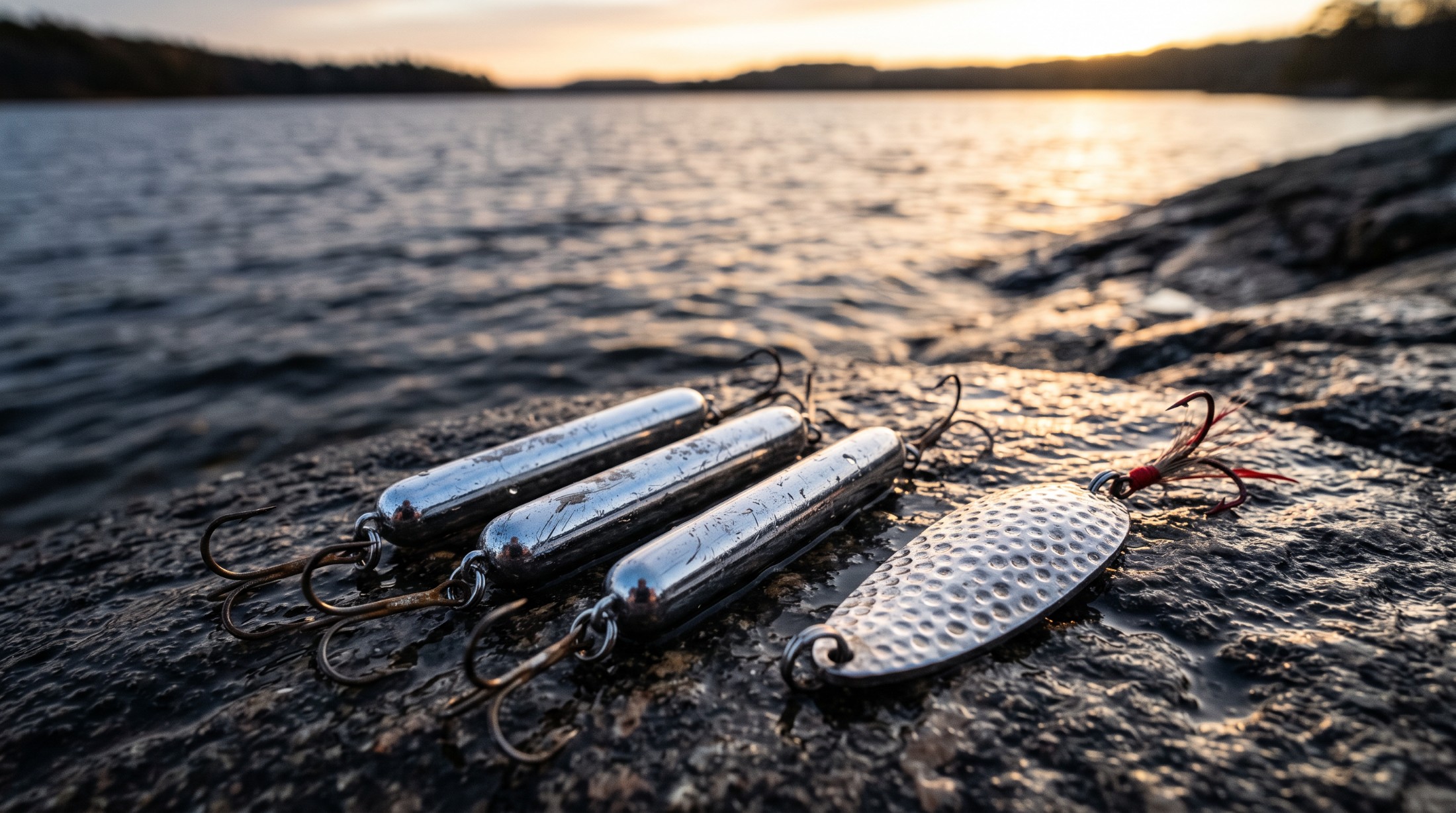
The slug is the metal most anglers reach for first. A slim, weighted bar of chrome or painted metal, it casts further than almost anything in the box, sinks fast to find fish holding deep, and flashes and wobbles like a panicked baitfish on the retrieve. It is compact, hard-wearing and cheap enough to lose to a reef without ruining the day. Wind it fast for surface-busting fish, or count it down and rip it through deeper water. See current metal casting slugs prices on Amazon.
The knife or slow-pitch jig
Long, heavy and built to plummet, a knife jig is the tool for deep water and fish sitting near the bottom in current. You drop it straight down, then work it back with sharp lifts that make it dart and flutter on the fall — which is when most fish grab it. Slow-pitch versions do the same job with a gentler, fluttering action for pressured or finicky fish. Rig one with an assist hook at the head for the best hook-up rate. Browse the current knife jigs listings on Amazon.
The micro jig
A tiny metal jig, often just a few grams, that punches well above its weight on light gear. It casts and sinks better than its size suggests and tempts a huge range of smaller, hard-fighting species that ignore bigger lures. Fished on a light rod and fine braid it is enormous fun and deadly when fish are keyed on small bait. Hop it along the bottom or flutter it through the water column. Shop micro jigs choices on Amazon.
The casting spoon
A curved, concave piece of metal that gives a wide, rolling wobble at almost any speed, which makes it forgiving to fish and a great starting point for anyone new to metals. Cast it out, wind it back at a steady pace, and the built-in action does the work, so it stays reliable across a range of species and conditions. Keep a couple of weights on hand and you have a lure that just keeps catching. Check current casting spoons stock on Amazon.
The metal vibe or blade
A metal vibe, or blade bait, is a flat metal lure that shivers with a tight vibration on the lift and flutters on the drop. It excels close to structure and along the bottom, where a lift-and-drop retrieve keeps it in the strike zone and the vibration calls fish in low light or murky water. It is a deadly search lure when fish are holding tight and not chasing, and it works both cast and dropped straight down. Compare metal vibes options on Amazon.
Comparison
| Type | Best for | Depth | Watch out for |
|---|---|---|---|
| Casting slug | Long casts, fish chasing bait | Surface to mid | Upgrade the split rings |
| Knife / slow-pitch jig | Deep water, bottom fish | Deep | Heavy; wants an assist hook |
| Micro jig | Small species on light gear | Shallow to mid | Fine hooks bend on big fish |
| Casting spoon | Easy, forgiving fishing | Shallow to mid | Can spin if wound too fast |
| Metal vibe / blade | Tight to structure, murky water | Mid to bottom | Snags in heavy cover |

Frequently Asked Questions
What size metal lure should I start with?
A couple of mid-weight slugs and a spoon in the middle of the size range cover most situations. Add a lighter micro jig and a heavier knife jig once you know whether you fish shallow or deep more often, rather than buying one of everything at once.
Do I need to upgrade the hooks and rings?
Often, yes. Budget metals frequently ship with soft hooks and light split rings, and on fast, hard-hitting fish these are the first things to fail. Swapping in quality trebles or assist hooks and stronger rings is cheap insurance against lost fish.
Are metal lures good for beginners?
Very. A casting spoon in particular has a built-in wobble that works on a simple steady retrieve, so there is little technique to learn. Metals also cast a long way and cost little, which makes them a forgiving way to start throwing lures.
Do metals work in both fresh and salt water?
Yes, and the same principles carry across: smaller spoons and micro jigs shine on freshwater species, while heavier slugs and knife jigs suit bigger saltwater fish. Just rinse them and check the hooks and rings after salt use, because corrosion kills a metal lure long before the metal itself wears out.
The Bottom Line
Metal lures earn their place because they do what no other lure can: cast a mile, sink to the fish, and flash like fleeing bait once they get there. Start with a couple of casting slugs and a spoon, add a knife jig when you fish deep and a micro jig when you fish light, and keep a vibe for working tight to structure. Match the weight to the depth, fish the drop rather than the flat wind, and upgrade the rings before a good fish does it for you.
Round out the lure box with our guides to the best hard-body fishing lures, the best soft plastic lure kits, and the best squid jigs for when the target changes.