
This page contains affiliate links. Far Cornel may earn a commission if you buy through them, at no extra cost to you.
See the top-rated gear on Amazon →
Quick answer: For touring and frequent moves a rooftop tent wins — it folds out in minutes, sleeps you off wet ground on a built-in mattress, and needs only a capable vehicle and a roof rack. For families, base camps and tighter budgets a ground tent wins — far cheaper, scales to any group, and you can leave it pitched and drive off. Soft-shells are roomier, hard-shells faster; domes suit groups, lightweight tents suit hiking in.
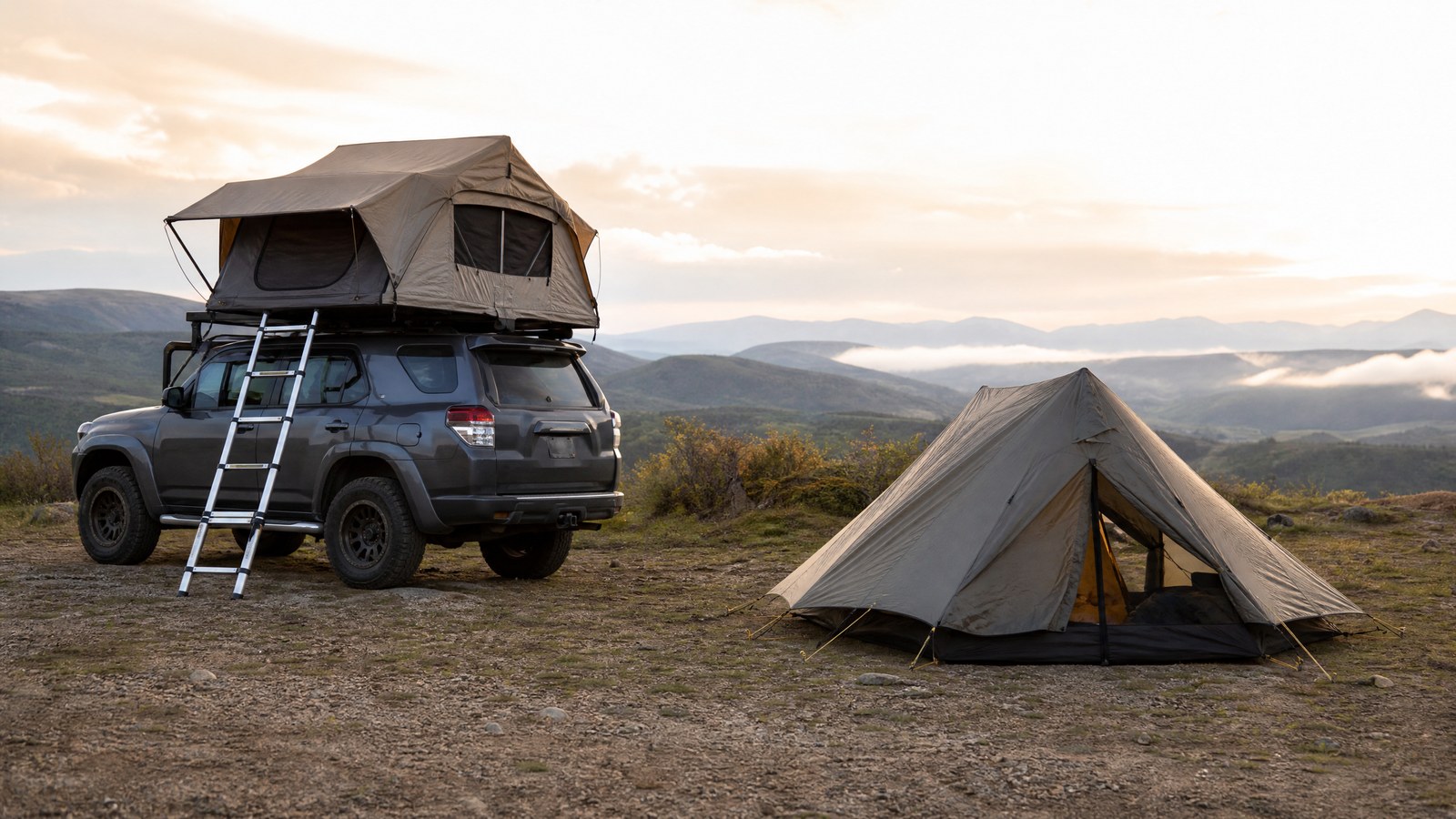
A rooftop tent looks fantastic folded out on a 4WD at sunset, and that image sells a lot of them. But it is a serious investment, it is not automatically better than a good ground tent, and the shape of your trips decides which one you will actually be glad you bought. Pick wrong and you either overspend on something that fights how you travel, or you spend three seasons wishing you were up off the cold, wet ground.
Two questions settle it more often than any spec sheet: how often do you move camp, and what will your vehicle and budget allow? Relocate daily and a rooftop tent is a joy; set up a base camp and explore from it and a ground tent is the smarter tool. Below is the honest trade-off, then the five setups worth choosing between so you can match one to the way you camp rather than the way it photographs.
Quick Picks
- Best for touring: a soft-shell rooftop tent for roomy, off-ground sleeping.
- Best for fast setup: a hard-shell rooftop tent that pops up in a minute.
- Best for families: a freestanding dome ground tent.
- Best for quick nights: an instant, quick-pitch ground tent.
- Best for hiking in: a lightweight, packable ground tent.

How to Choose Between Them
A rooftop tent mounts on your roof bars and folds out into a platform up top. The appeal is real: setup takes minutes, you sleep off the ground away from water, mud, cold and crawling things, and the built-in mattress beats a thin mat. The trade-offs are just as real — it is expensive and heavy, it needs a capable vehicle with a rated roof rack, and your bedroom travels everywhere, so a run into town means packing up camp. Capacity tops out around two or three, and you climb a ladder to bed.
A ground tent is the classic for good reason: cheap, sized from a one-person shelter to a family cabin, packs small, and you can leave it standing while you drive off to explore. It works with any vehicle, or none if you hike in — though you need a flat, dry spot, a good mat for comfort, and it can flood or gather condensation in bad weather. So weigh the two deciding questions: constant moves and off-ground comfort point to the roof; a family, a base camp or a tight budget point to the ground. Before you spend on a rooftop tent, check your vehicle’s dynamic roof load rating, because a heavy tent plus two sleepers can exceed it.
That figure is lower than most people expect. Plenty of wagons and utes allow only 60 to 100 kg on the move, and a hard-shell tent can swallow most of it before anyone climbs the ladder — a soft-shell usually weighs less and leaves more headroom for two sleepers. A small hatchback, or any vehicle with a low roof limit, simply is not a rooftop candidate no matter how good the showroom photo looks. The weight you do add sits high, so you feel it in body roll, wind noise and fuel use on every drive, and you climb down into the weather every time nature calls at 2am. A ground tent asks for none of that: it rides low in the boot and leaves your roof, your handling and your fuel bill alone. Those hidden costs, not the sticker price, are what buyers underestimate most.
The Shelter Setups
Check today’s prices on Amazon →
The soft-shell rooftop tent
The soft-shell is the roomy, better-value way onto the roof. It folds open over the side of the vehicle, usually doubling your sleeping area and often adding a covered annexe below, so two or three people get real space for the money. Darche, ARB and Bushranger all make well-sorted ones. The cost is a slightly longer setup than a hard-shell and a bulkier folded profile that nudges fuel use, but for the most tent per dollar it is the pick. See what soft-shell rooftop tents are going for
The hard-shell rooftop tent
If setup speed is everything, a hard-shell is the answer. Pop the clamps and a gas-strut lid lifts the tent into shape in under a minute, and packing away is nearly as quick because there is no fabric to fold and wrestle. The rigid lid sheds weather well and sits lower and more aerodynamic than a folded soft-shell. You pay for it: hard-shells cost more and usually sleep fewer people for the same footprint. For a solo traveller or a couple who relocate daily and want to be in bed five minutes after stopping, it is worth it. Compare the hard-shell pop-up options
The freestanding family dome
For groups, nothing beats a freestanding dome for value and space. A three or four-hoop dome gives standing room, separate sleeping pods and a floor area no rooftop tent can match, for a fraction of the price; Coleman and Darche make dependable ones. You pitch it once and leave it, so you can drive off for the day and come back to camp still standing. It takes longer to pitch and needs a flat, dry patch, but for families it is the obvious choice. Find a family dome in the size you need
The instant quick-pitch tent
If the ground tent’s only real drawback is pitching time, an instant tent closes most of that gap. Pre-attached poles mean you unfold it, pull the legs out and it stands in a minute or two — Coleman and Zempire make the popular ones. You still leave it pitched and drive away, and it stores flat in the boot. It is a little heavier folded than a traditional poled tent, but for weekenders who hate faffing with poles it is a brilliant middle ground. Check what an instant pop-up tent costs
The lightweight hike-in tent
When you carry your shelter on your back, weight and pack size rule everything, and this is the one arena a rooftop tent cannot enter at all. A lightweight two or three-person tent with alloy poles pitches small, packs to fit a rucksack, and lets you camp far from any road. You trade some interior space and foul-weather comfort for the freedom to sleep wherever your legs take you. Pair it with a good insulated mat and it is a comfortable base for hiking in. Weigh up the lightweight hike-in tents

Comparison
| Setup | Setup time | Sleeps | Needs | Best for |
|---|---|---|---|---|
| Soft-shell rooftop | A few minutes | 2–3 | Capable vehicle + rack | Touring on a budget |
| Hard-shell rooftop | Under a minute | 1–2 | Capable vehicle + rack | Fast daily moves |
| Family dome | Longer | Up to large family | Flat, dry ground | Groups, base camp |
| Instant quick-pitch | A minute or two | 2–6 | Flat, dry ground | Easy weekends |
| Lightweight hike-in | Moderate | 1–3 | Nothing but your back | Hiking in |
Frequently Asked Questions
Which is better, a rooftop tent or a ground tent?
Neither wins outright — it depends on how you travel. Rooftop tents set up fast and keep you off wet, uneven ground, while ground tents are cheaper, load nothing onto your roof and let you leave the vehicle at camp. Frequent movers lean rooftop; families and base-campers lean ground.
Can my vehicle take a rooftop tent?
Only if it has a rated roof rack and enough dynamic load capacity, which is the weight the roof can carry while driving. A rooftop tent plus two sleepers is heavy, so check your vehicle’s figures before buying — a small hatch or a car with low roof limits is not a candidate.
Can I leave camp set up and drive off?
With a ground tent, yes — pitch it and explore freely. A rooftop tent comes down with the vehicle every time you drive, so leaving camp means packing up, unless you add a detachable annexe that stays behind.
Does a rooftop tent affect fuel and handling?
Yes. The weight sits high and adds wind resistance, so expect more body roll, a taller height to watch, and higher fuel use at speed. A ground tent packs low in the boot and has none of that overhead.
The Bottom Line
A rooftop tent is brilliant for tourers who move camp often and want fast setup and off-ground comfort — provided you have a capable vehicle, a rated rack and the budget, with a hard-shell for speed or a soft-shell for space. A ground tent is the more flexible, affordable and family-friendly choice: pitch it, leave it, and explore, in sizes for everyone and with no vehicle demands. Decide by how you travel — relocating daily points to the roof, a base camp points to the ground.
For specific picks, see our guides to the best rooftop tents and the best camping tents, plus our walkthrough on how to choose a rooftop tent.