
This page contains affiliate links. Far Cornel may earn a commission if you buy through them, at no extra cost to you.
See the top-rated gear on Amazon →
Quick answer: Down is the warmest, most packable insulation and lasts years if you keep it dry — the pick for backpacking and cold, dry trips. Synthetic keeps insulating when damp, dries fast and costs less — the safer choice for wet climates, car camping, kids and tight budgets. Treated (hydrophobic) down splits the difference, giving you most of down’s packability with more resistance to wetting out. Match the fill to your conditions and you will sleep warm.
The lesson that stuck with me came from a soaked down bag that turned into a row of cold, useless ropes overnight after the tent leaked. Untreated down is the best insulator there is right up until it gets wet, and then it is worse than almost anything. That single weakness is the heart of the whole down-versus-synthetic question, whether you are buying a sleeping bag or an insulated jacket.
Both fills work the same way — they trap a layer of warm air against you — but they handle the real world very differently. Down wins on warmth for its weight and on how small it packs; synthetic wins on wet weather, price and low-fuss care. Get the choice right for where you actually camp and you carry no more than you need. Get it wrong and you are cold, damp, or hauling a bag that will not compress. Here is how they compare, and the five options that come out of it.
Quick Picks
- Best warmth-to-weight: a down sleeping bag for dry, cold trips.
- Best all-weather value: a synthetic sleeping bag.
- Best of both: a treated (hydrophobic) down bag.
- Best packable layer: a down insulated jacket.
- Best damp-proof layer: a synthetic insulated jacket.

How to Choose Between Them
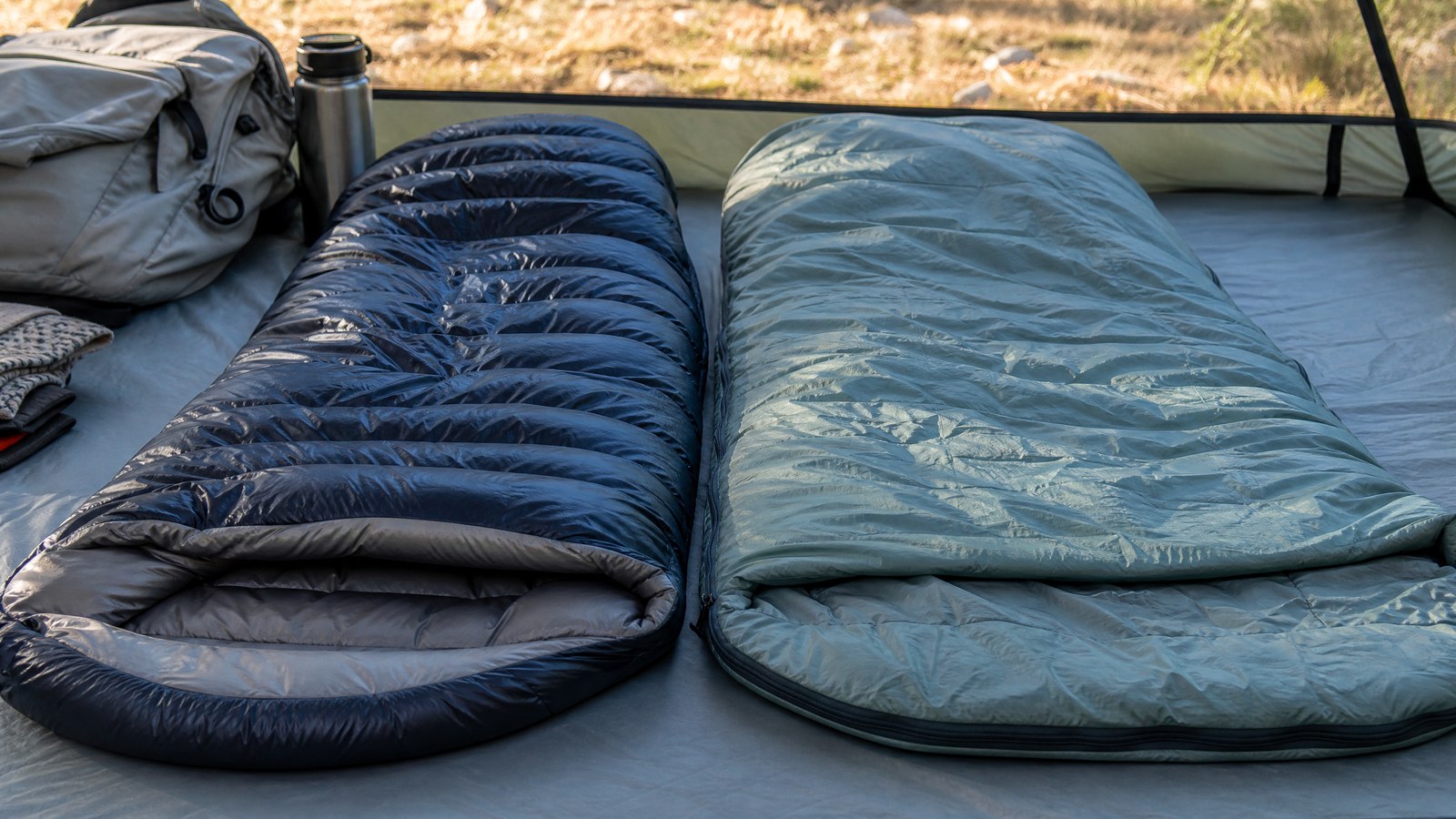
Down is the soft under-plumage from ducks and geese, and gram for gram nothing traps more warmth. It lofts up huge for very little weight, compresses tiny, breathes well and lasts many years if you look after it; its quality is graded by fill power, usually 650 to 900-plus. The catch is blunt: untreated down collapses when wet, stops insulating and dries slowly, and it costs more. One point people miss — fill power measures efficiency, not total warmth, so a bag’s real heat depends on the fill power and how much down is packed in.
Synthetic is man-made fibre built to mimic that structure. Its strength is that it keeps insulating even when damp and dries fast — a real safety margin in the wet — and it is cheaper, easy to wash and tough. The trade-offs are weight and life: bulkier for the same warmth, and its loft fades sooner than quality down. Treated (hydrophobic) down is the middle path, coated to slow how fast it wets out at a higher price. So choose by conditions: down for dry cold, backpacking and pack size; synthetic for damp trips, paddling, car camping, kids and tight budgets; treated down if you love down but fear moisture. Whatever you pick, store it loose and dry, never crushed for months.
The Options
Check today’s prices on Amazon →
The down sleeping bag
For dry, cold trips and anytime you carry the bag, down is the one you feel the benefit of. A good down bag with 650 to 900 fill power packs to the size of a loaf, weighs a fraction of the synthetic equivalent, and lofts back up warm year after year if stored loose and dry. Sea to Summit and Exped make lovely ones. Respect the water weakness — a leaky tent can flatten it — and it rewards you with the best warmth-to-weight and pack size going, plus a long life. See how the down bags stack up on loft and weight
The synthetic sleeping bag
Synthetic is the safe, sensible default for most camping, and especially for anywhere damp. It shrugs off a night of condensation, dries fast on the vehicle at lunchtime, washes without drama and costs far less, which is why it is the bag I steer beginners and families toward. The price is bulk and lifespan: it packs larger and its loft fades sooner than quality down. For car camping, where boot space is not precious, and for wet climates where reliability beats grams, that is an easy trade to make. Find a synthetic bag rated for your coldest night
The treated (hydrophobic) down bag
If you love down’s warmth but camp where damp is always lurking, treated down is the clever middle ground. A water-resistant coating on the plumes slows how fast they wet out, so the fill keeps more of its loft through a humid night and dries quicker than untreated down. Sea to Summit build well-regarded ones. It is not waterproof and costs more than plain down, but it takes the sharpest edge off down’s one real weakness while keeping most of what makes it special. Price up a treated (hydrophobic) down bag
The down insulated jacket
The same logic applies to what you wear around camp. A down insulated jacket is astonishingly warm for its weight and squashes into its own pocket, so it lives in the pack for cold mornings and barely registers on your back. Kept dry it is the cosiest layer you can carry, but the moment it gets properly wet it goes flat and cold like any down, so it suits crisp, dry conditions more than steady rain — pair it with a shell if the weather turns. See what the down jackets are going for
The synthetic insulated jacket
When the forecast is wet, or you will be sweating and cooling on the move, a synthetic insulated jacket is the more dependable layer. It keeps warming you when damp, dries fast, and takes rough handling and regular washing without losing much loft — the low-fuss choice for changeable weather and for kids who find every puddle. It packs a little larger than down for the same warmth, but for reliability when moisture is about, that is a fair price. Compare synthetic insulated jackets for damp trips

Comparison
| Type | Warmth-to-weight | Wet performance | Packs small? | Best for |
|---|---|---|---|---|
| Down bag | Best | Poor when wet | Yes, very | Dry cold, backpacking |
| Synthetic bag | Lower | Keeps insulating | No, bulkier | Damp, budget, car camping |
| Treated down bag | Near best | Better than plain down | Yes | Down fans in damp climates |
| Down jacket | Best | Poor when wet | Yes, into its pocket | Cold, dry camp layers |
| Synthetic jacket | Lower | Keeps insulating | Fairly | Wet, active, hard use |
Frequently Asked Questions
Down or synthetic, which is warmer?
Down is warmer for its weight and packs far smaller, which is why it dominates cold-weather bags and jackets. But that only holds while it stays dry — a soaked down bag is colder than a soaked synthetic one, so the honest answer depends on whether you can keep it dry.
Which should I choose for wet or humid conditions?
Synthetic is the safer pick when damp is likely, because it keeps insulating when wet and dries fast. If you would rather have down for its packability, treated (hydrophobic) down is the compromise that copes far better with moisture than the untreated kind.
Does a higher fill power mean a warmer bag?
Not on its own. Fill power measures how much a given weight of down lofts, so it is a measure of efficiency, not total warmth. A bag’s real warmth comes from the fill power combined with how much down is used, so check the temperature rating rather than the fill number alone.
How do I care for each?
Store both loosely or hung up, never crushed in the stuff sack for months, and keep them dry — down especially loses loft if damp or compressed too long. A liner keeps either one cleaner and adds a few degrees of warmth on cold nights.
The Bottom Line
Down is the choice when you want the warmest, most packable insulation and can keep it dry — ideal for backpacking and cold, dry trips, and it will last for years. Synthetic is the choice when moisture is in the picture, the budget is tight, or for low-fuss car camping and kids, because it keeps warming you when damp and dries fast. If you want down’s packability with more weather resistance, treated down splits the difference. Match the fill to your conditions and you will sleep warm.
Put it into practice with our picks of the best sleeping bags for camping, the full camping sleep system guide, and shelter to match from the best camping tents.