
This page contains affiliate links. Far Cornel may earn a commission if you buy through them, at no extra cost to you.
See the top-rated gear on Amazon →
Quick answer: For a garage, a wall-mounted horizontal rack is the best-value fix and keeps rods off the floor; go vertical or freestanding if you want to display a big collection, and ceiling mounts if you run long one-piece rods. In a vehicle, an interior grab-handle sling suits most wagons, while a lockable roof tube protects rods on rough touring runs.
Snapping a tip in a slammed tailgate, or standing on a rod you left leaning in the corner, teaches the same lesson twice: rods need somewhere to live. They are long, awkward, and surprisingly fragile at the tip and the guides, and a pile of them in a boot turns into a tangle of line and cracked runners within a week. A rack is cheap insurance that also happens to make getting out the door faster.
The decision is really two decisions, because a rack that suits a garage wall is useless bouncing down a dirt track, and a vehicle mount holds a fraction of what a wall rack will. Sort out where the rods need to be, at home and in transit, and the right style falls out of that.
Quick Picks
- Best overall for a garage: a wall-mounted horizontal rack.
- Best for a big collection: a freestanding vertical rack with a spinning base.
- Best space-saver: a ceiling-mounted rack for long rods.
- Best in-vehicle option: an interior grab-handle sling.
- Best for touring: a lockable hard-shell roof tube.

How to Choose a Rod Storage Rack
Start with capacity, then immediately halve your optimism. Here is the mistake almost everyone makes: a rack sold as holding twelve rods holds twelve bare blanks, not twelve rods with reels attached. Leave a 4000-size spinning reel on each one and the bodies clash, so a “twelve-rod” rack realistically stores six or seven rigged outfits. Measure the slot spacing against your biggest reel, not the marketing number.
Then think about the grips that actually touch the blank. Soft foam or rubber cradles are kind to graphite and let you slide a rod in and out without scraping a guide; hard plastic clips scratch blanks and chip runners over time. For a garage, check whether you are drilling into timber studs or masonry, because a fully loaded rack of heavy overhead outfits is heavier than it looks and plasterboard anchors will not hold it. For a vehicle, clearance is everything: an interior sling mounted too low blocks a mirror or clips a passenger in the head.
One more myth to retire: rods do not need to hang under tension to stay straight, and in fact the opposite is true. Store them with the drag backed off and the blank unweighted, whether vertical or horizontal, and a good blank keeps its shape for years. It is constant load and heat that set a curve, not simple horizontal storage.
The Racks
Check today’s prices on Amazon →
Wall-mounted horizontal rack
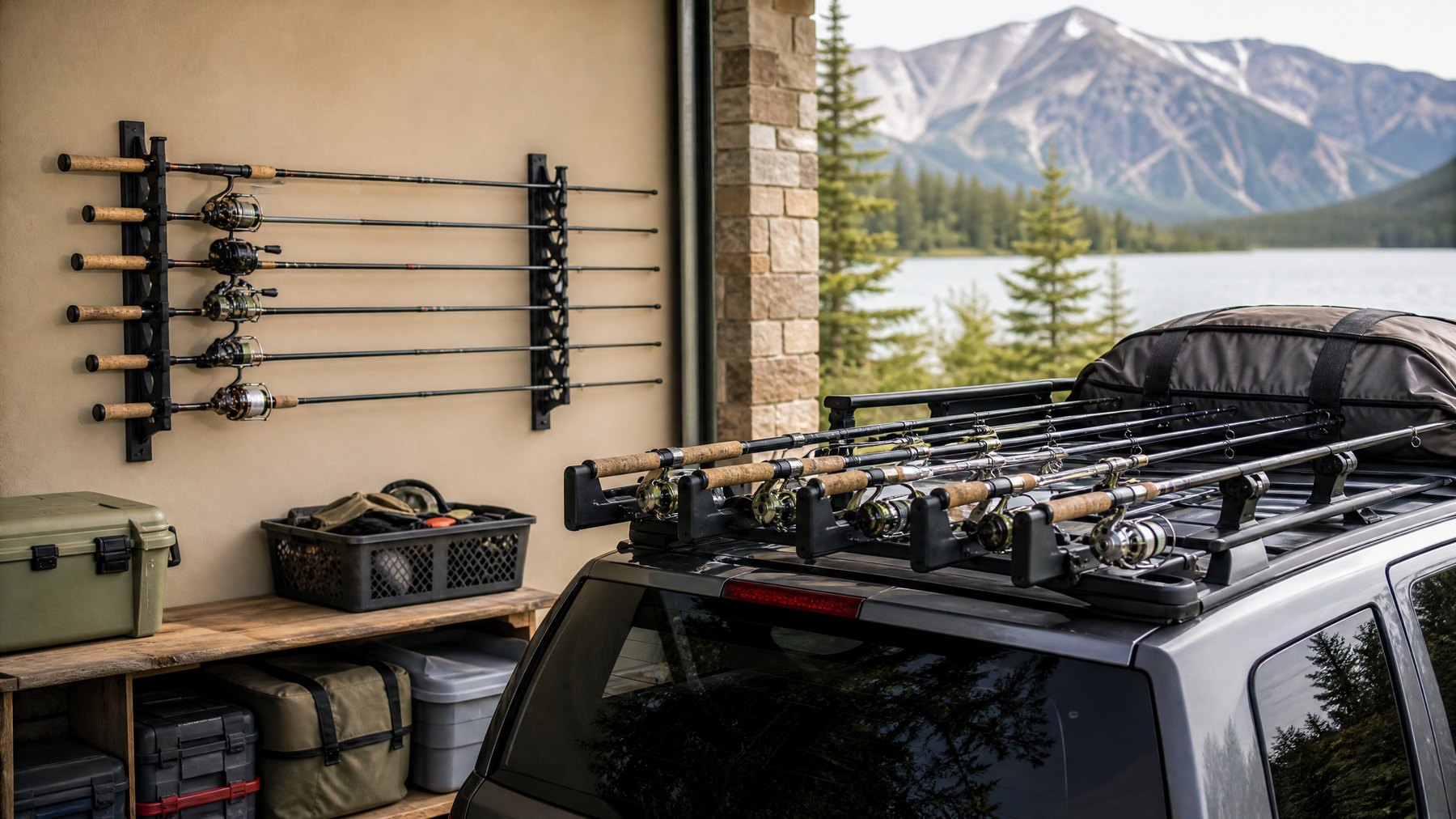
The most useful rack most people can buy. Two brackets on the wall cradle the rods sideways, high enough to clear a workbench or the bonnet of a parked car, and out of the traffic of a busy garage. Horizontal storage suits long rods that will not stand upright under a normal ceiling, and it keeps everything visible so you grab the right outfit first time. Fix it into studs, space the cradles for your reels, and it disappears into the wall. Browse the current wall-mounted fishing rod racks listings on Amazon.
Freestanding vertical rack
The tackle-shop classic: rods stand butt-down in a ring of slots, often on a spinning base so you can turn the whole thing to reach the outfit you want. It needs no drilling, moves when you rearrange the garage, and looks the part if you like your gear on show. The cost is floor space, which is scarce in a compact garage, and a top-heavy loaded rack can tip if it is knocked, so pick one with a wide, weighted base. Check current freestanding fishing rod racks stock on Amazon.
Ceiling-mounted rack
When floor and wall space are both spoken for, the ceiling is dead room waiting to be used. Ceiling racks screw into the joists and hold rods flat overhead, which is ideal for long one-piece rods that are too tall to stand up. The trade-off is access: loading and unloading over your head takes more care, and you will not want your everyday outfits up there. Reserve it for the long rods you use occasionally rather than the ones you grab weekly. Look over the current ceiling fishing rod racks options on Amazon.
Interior grab-handle sling
For a wagon or SUV, a simple strap system between the grab handles above the doors is hard to beat. It carries the rods rigged and ready along the roofline, out of the way of the load in the back and hidden from view when you park. It is cheap, fits in minutes, and comes out again just as fast for the daily commute. Watch the clearance so tips do not touch the windscreen and the rods sit above head height for rear passengers. See the newest interior car fishing rod holders listings on Amazon.
Lockable roof tube
If the cabin is full of camping gear and passengers, rods go on the roof in a hard-shell tube. A lockable tube keeps them safe from dust, rain, low branches and light fingers on a long trip, and frees the whole cabin for everything else. It costs more and needs existing roof bars, but for serious touring it is the setup that survives corrugations without a cracked tip. Use thread locker on the fittings so vibration does not shake them loose. See how the roof rod tube carriers options stack up on Amazon.

Comparison
| Rack style | Where it lives | Capacity | Watch-out |
|---|---|---|---|
| Wall horizontal | Garage or shed wall | Medium to high | Needs fixing into studs |
| Freestanding vertical | Garage floor | High | Eats floor space, can tip if knocked |
| Ceiling | Overhead joists | High | Awkward to load and unload |
| Interior sling | Wagon or SUV cabin | Low | Clearance for mirror and passengers |
| Roof tube | Vehicle roof bars | Low to medium | Costs more, needs existing bars |
Frequently Asked Questions
Do I really need a rack, or will a corner do?
A corner works until a rod slides, a tip catches a door, or lines tangle into one knot. A rack keeps rods separated, off the floor and undamaged, and it saves the twenty minutes of untangling that makes you late for the bite. Even a couple of foam cradles on a wall beats the corner.
Vehicle rack or garage rack?
They do different jobs, and plenty of anglers run both. A garage rack stores the collection safely at home; a vehicle rack carries a few outfits rigged and ready between spots. Match each to how many rods you own and how far you travel with them.
Will it fit rods with reels still attached?
Only if the slot spacing suits your reels, so check that first. Big spinning and overhead reels need wide gaps or they clash, which halves the real capacity and scratches the reel feet. If you store rods rigged, size the rack around your largest reel.
Can I store rods horizontally long-term without warping them?
Yes. A blank kept flat and unweighted holds its shape indefinitely; what sets a curve is storing a rod under load or bent against something for months. Back the drag off, support the rod along its length, and horizontal storage is perfectly safe.
The Bottom Line
Pick the rack for the space, not the photo. A wall-mounted horizontal rack solves most garages cheaply, a freestanding vertical rack suits a big collection you like on show, and ceiling mounts rescue long rods when the walls are full. In the vehicle, a grab-handle sling covers everyday trips and a lockable roof tube earns its keep on rough touring runs. Whichever you choose, size the slots around your reels and use soft grips, and your rods will outlast the rack.
Related reading: our guides to fishing rod bags and cases, fishing rod holders, and fishing backpacks.