
This page contains affiliate links. Far Cornel may earn a commission if you buy through them, at no extra cost to you.
See the top-rated gear on Amazon →
Quick answer: For kayak and small-boat anglers, a rechargeable lithium aerator gives the most consistent air for the money, while a simple D-cell unit wins for remote trips where you can swap batteries anywhere. A 12V plug-in pump suits boats and vehicles with power to spare, and a high-output dual-airstone model is what you need for a big tank of bait. Whatever you run, carry backup power.
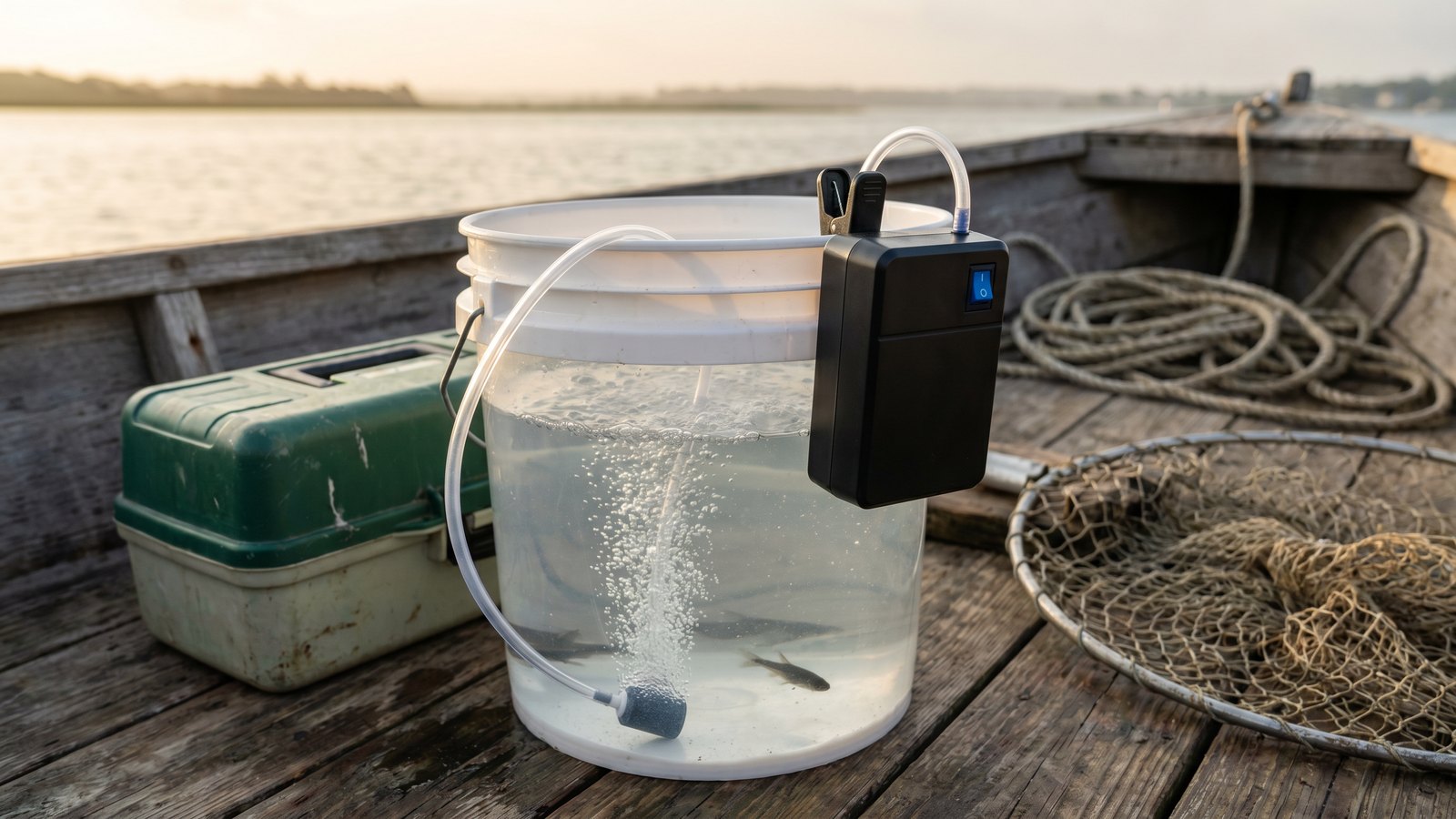
Spend good money on live bait, then watch half of it float belly-up before you reach the water, and you learn the lesson fast. Lively bait is often the difference between a busy session and a slow one, whether you are chasing flathead in the shallows or something bigger in deeper water. The fix is cheap and simple: a portable aerator that keeps oxygen in the bucket so your bait stays active and worth fishing.
From a kayak, a small boat, or a bucket in the vehicle, keeping bait alive through transport and a hot day is a constant battle, because warm water and crowding strip oxygen quickly. A good aerator pushes fresh air through an airstone, lifting oxygen and driving off the carbon dioxide and ammonia that turn bait sluggish. This guide sorts the options by how you power them and how much bait you keep.
Quick Picks
- Best overall: a rechargeable lithium aerator with a run-time display.
- Best for remote trips: a simple D-cell battery aerator.
- Best for boats and vehicles: a 12V plug-in pump.
- Best for big bait tanks: a high-output dual-airstone pump.
- Best for hot days: an aerator paired with an insulated bait bucket.

How to Choose a Portable Bait Aerator
Power comes first, because it decides where you can use the pump and for how long. Standard D-cell or AA units are simple and let you swap cells anywhere, which suits remote trips; rechargeable lithium models cost less to run and hold a steadier output; and 12V plug-in pumps give unlimited run time where a battery is available. For a kayak or a small boat with no power, look for at least 24 hours on a set of cells or a charge, and an intermittent mode that runs, say, 15 minutes on and 15 off to stretch it further.
Then match the airflow to the bait. A small pump keeps a 10 litre bucket of prawns happy, but a tank of larger, oxygen-hungry baitfish like slimy mackerel needs a high-output unit, ideally with two airstones, to move enough air. Undersize it and the bait fades no matter how fresh the cells are. Water resistance matters too: the pump will be splashed and rained on, so look for sealed housings and corrosion-resistant parts, accepting that no aerator is fully waterproof since it must draw air.
Here is the myth that costs people bait: the aerator alone does not keep it alive. Heat and overcrowding kill bait faster than low oxygen ever will, because warm water holds less oxygen and crowded bait spikes the ammonia from its own waste. Shade the bucket, do not overload it, and change the water if it fouls. And if you only ever use dead or frozen bait, or always fish where you can pump fresh water through a tank, you may not need a portable aerator at all.
The Aerators
Check today’s prices on Amazon →
Rechargeable lithium aerator
For anyone who fishes often, this is the sensible default. A rechargeable lithium pump costs nothing to run once you own it, holds a consistent output as the charge drops rather than fading like alkaline cells, and usually charges by USB so you can top it up from a power bank. Look for a model that shows remaining run time and offers a low or intermittent mode for long days. The one discipline it demands is charging it before every trip, so pair it with a spare power source. See the newest rechargeable bait aerators listings on Amazon.
D-cell battery aerator
The simplest tool here is often the most reliable on a long trip. A D-cell or AA aerator has no charging to forget: when it slows, you drop in fresh cells and carry on, which is exactly what you want days from a power point. It is a little heavier for the batteries and there is an ongoing cost, but the fit-and-forget simplicity is hard to beat for remote work. Find the right battery bait aerators on Amazon.
12V plug-in pump
If you fish from a boat or run a bait tank in a vehicle, a 12V plug-in pump removes the battery worry entirely. Wired to the boat or vehicle supply, it runs all day at a strong output, which suits a bigger tank and a longer session where a portable unit would flatten. The trade is portability: it is tethered to a power source, so it is no help the moment you step off into a kayak. Look over the current 12V bait aerator pumps options on Amazon.
High-output dual-airstone pump
Keeping a lot of bait, or big, oxygen-hungry baitfish, calls for more air than a single small pump can move. A high-output model, often feeding two airstones, drives enough fine bubbles to hold a full tank of slimy mackerel or a heavy load of prawns through a hot day. It draws more power for that airflow, so plan the batteries or wiring around it. It is overkill for a small bucket, but essential once your bait load grows. Compare today’s high-output bait pumps prices on Amazon.
Aerator and insulated bucket combo
Because heat is the real killer, an aerator paired with an insulated bait bucket often keeps bait alive longer than a stronger pump alone. The insulation slows the water warming in the sun, and warm water is what holds less oxygen and stresses bait, so the two work together rather than in competition. A combo with a lid, a carry handle and a built-in pump mount keeps the whole setup tidy, and a frozen bottle of water dropped in helps on the hottest days. See how the insulated bait buckets with aerators options stack up on Amazon.

Comparison
| Aerator type | Power | Run time | Best for |
|---|---|---|---|
| Rechargeable lithium | USB charge | Long, steady output | Frequent anglers |
| D-cell battery | Swappable cells | As long as you carry spares | Remote trips |
| 12V plug-in | Boat or vehicle supply | Effectively unlimited | Boats and vehicle tanks |
| High-output dual-airstone | Battery or 12V | Shorter on batteries | Big or hungry bait loads |
| Insulated bucket combo | Battery pump | Extended by cooler water | Hot days and long transport |
Frequently Asked Questions
Do I really need an aerator for live bait?
If you fish with live bait, yes, especially on warm days. Bait uses up the oxygen in a bucket quickly, and an aerator keeps it lively far longer, which means better presentation and more bites. On a hot afternoon it is often the difference between live bait and a bucket of floaters.
Battery or rechargeable?
Battery units are simple and let you swap cells anywhere, which suits remote trips; rechargeable lithium ones cost less to run and hold a steadier output. Either way, carry backup power for a long session, because running out of air mid-trip wastes the bait you paid for.
How do I keep bait alive longer?
Keep the water cool and shaded, do not overcrowd the bucket, change the water if it fouls, and run the aerator steadily. Heat and overcrowding kill bait faster than anything else, so an insulated bucket and a sensible load matter as much as the pump itself.
How big a pump do I need for my bucket?
Match the airflow to the volume and the bait. A small pump handles a 10 litre bucket of prawns, but a larger tank or big, oxygen-hungry baitfish needs a high-output unit, ideally with two airstones. Undersize it and the bait fades no matter how fresh the batteries are.
The Bottom Line
A portable aerator is a small buy that protects the bait your session depends on. Prioritise consistent power and enough airflow for your bait load, lean rechargeable if you fish often and D-cell for remote trips, and always carry backup power. Remember the pump is only half the job: shade the bucket and do not overcrowd it.
Related: fishing gear checklist and fishing landing nets, and cast nets for catching live bait.