
This page contains affiliate links. Far Cornel may earn a commission if you buy through them, at no extra cost to you.
See the top-rated gear on Amazon →
Quick answer: The smart buy is a mid-size soft vehicle kit with a proper compression bandage and a trauma dressing built in — enough to handle real injuries far from help without filling a locker. Carry a compact personal kit for day walks, add a dedicated snake-and-spider bite module if you travel remote, size up to an expedition kit for long off-grid trips, and keep a waterproof kit with the boat and fishing gear.
Most vehicle first aid kits are bought in a hurry the day before a big trip, thrown in the boot, and never opened again until something goes wrong — at which point you discover it is a home-office kit with forty plasters and little else. A touring kit has a different job. It has to cope with heat that melts adhesives, dust that gets into everything, constant vibration on rough tracks, and the plain fact that the nearest clinic might be hours of driving away.
That distance changes what you carry. A cut that needs a plaster at home might need proper wound closure and a clean dressing when a pharmacy is a day’s drive off, and a bad sprain or a bite becomes something you manage yourself for a while, not something an ambulance sorts in ten minutes. The right kit is built around that gap between the injury and real medical help — and it is organised so you can find the compression bandage in seconds, not tip the whole bag onto the dirt hunting for it.
Quick Picks
- Best overall: a mid-size soft vehicle kit with a compression bandage and trauma dressing included.
- Best for day walks: a compact personal kit that lives in a daypack.
- Best for remote trips: a comprehensive expedition kit with a splint and extra trauma gear.
- Best for the boat: a fully waterproof kit with rust-proof tools.
- Best add-on: a dedicated snake-and-spider bite module of heavy crepe bandages.

How to Choose a Touring First Aid Kit
Judge a kit by what it lets you do far from help, not by the piece count printed on the front. The items that earn their place are the ones a home kit skips: two or more heavy elasticised crepe bandages for pressure-immobilisation of a bite, a large trauma dressing for serious bleeding, quality shears that cut through a jacket, saline to flush a gritty wound, and burn gel. The brands that build kits around this — the likes of Survival, Adventure Medical Kits and St John — lay them out in labelled fold-out pouches so the right item is obvious under pressure.
Then look at the case and where it will live. A tough 600-denier fabric roll survives being wedged behind a drawer far better than a brittle plastic box, and it rattles less on corrugations. Heat is the hidden enemy: adhesives, gels and medicines all degrade in a vehicle that bakes all day, so store the kit low and shaded and audit it yearly. Buy one you can refill from any pharmacy rather than a kit locked to a proprietary cartridge — you will restock consumables constantly, and standard sizes make that cheap.
The myth to drop is that owning the kit makes you prepared. A trauma dressing you have never unwrapped is close to useless in a genuine emergency; the kit is only as good as the training behind it, so a basic remote first aid course is the real upgrade. And do not buy a giant expedition kit if you only ever camp at serviced sites twenty minutes from a town — a compact kit and a charged phone cover that trip, and the big one just eats space you do not have.
The Travel First Aid Kits
Check today’s prices on Amazon →
Compact personal kit
Small enough to live in a daypack or a door pocket, this is the kit you actually have on you when you wander away from the vehicle. It handles the everyday stuff — cuts, blisters, splinters, a headache — and not much more, which is exactly the point. Pack it with wound care, blister dressings, antiseptic and any personal medication, and treat it as your grab-and-go layer rather than your only kit. A good one weighs almost nothing and so it gets carried, which beats a comprehensive kit sitting locked in the boot. Browse the current compact first aid kit listings on Amazon.
Mid-size vehicle kit
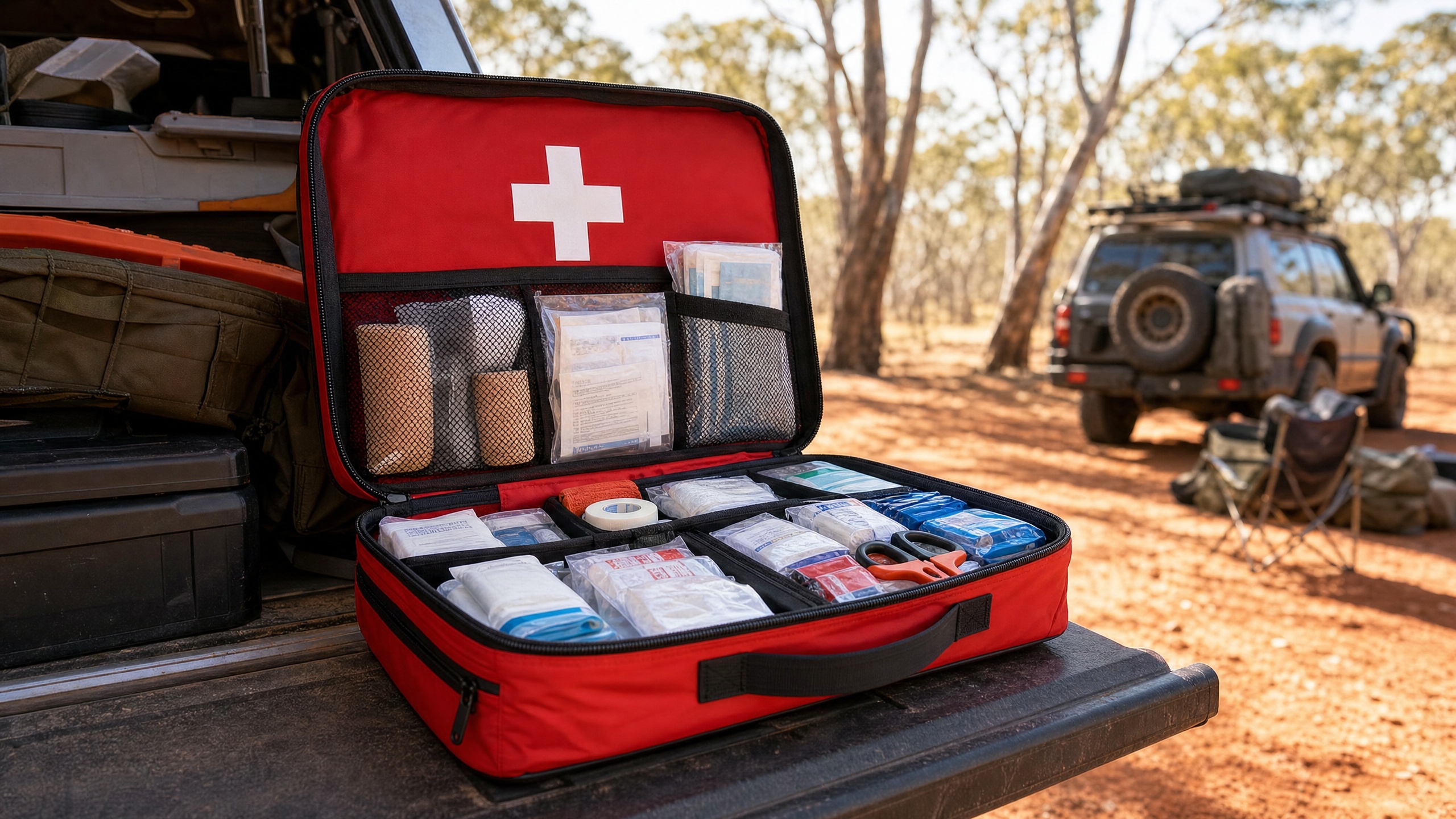
This is the one that should live permanently in the vehicle. Roughly the size of a large toiletry bag, a soft-sided touring kit carries a real spread — a range of dressings, at least one heavy crepe bandage, shears, saline, gloves and burn gel — laid out in see-through pouches so anyone in the vehicle can find things fast. It is the kit I would hand a couple heading off for a fortnight without a second thought. Look for one you can add your own medications and extras to, because the stock contents are a starting point, not the finished article. Compare vehicle first aid kit options on Amazon.
Comprehensive expedition kit
Once help is genuinely hours away, the maths shifts and a larger expedition kit earns its space. On top of the standard consumables it adds the serious-injury gear: multiple trauma dressings, a splint roll, extra compression bandages, sometimes a wound-closure set and a proper manual. It is overkill for a weekend near town and it is bulky, but for long off-grid travel it is the difference between managing a bad situation and improvising badly. Pair it with a beacon or satellite messenger and, above all, the knowledge to use the contents. Check current remote area first aid kit stock on Amazon.
Waterproof marine kit
If part of your trip happens on or near water — a small boat, a kayak, coastal camping — a sealed waterproof kit keeps dressings sterile after a splash or a downpour. Roll-top or gasket-sealed cases stop the contents turning to mush, and rust-proof tools survive the damp and salt that ruin cheaper shears. Capacity is smaller than a dry vehicle kit, so stock it with the essentials and keep the big kit in the vehicle. It also doubles as your wet-weather grab kit when everything else in camp is soaked. Run your eye over the waterproof first aid kit range on Amazon.
Snake-and-spider bite module
This is less a standalone kit than the add-on every remote tourer should carry: two or more heavy elasticised crepe bandages marked with a tension guide, plus a clear card on the pressure-immobilisation technique. Bites are exactly the scenario where minutes matter and a general kit falls short, so keeping a dedicated module — ideally more than one set of bandages — means you are not raiding your only compression bandage for a sprain and finding it gone when it counts. Learn the technique before you ever need it. Compare today’s snake bite bandage kit prices on Amazon.

Comparison
| Kit | Best for | Standout contents | Size |
|---|---|---|---|
| Compact personal | Day walks, daypack | Wound care, blister, meds | Small |
| Mid vehicle | Everyday touring | Crepe bandage, shears, saline | Medium |
| Expedition | Remote off-grid | Trauma dressings, splint | Large |
| Waterproof marine | Boat and coast | Sealed case, rust-proof tools | Medium |
| Bite module | Remote add-on | Heavy crepe bandages | Small |
Frequently Asked Questions
What does a touring kit need that a home kit doesn’t?
The gear for the gap before help arrives: at least one heavy compression bandage for a bite, a trauma dressing for serious bleeding, decent shears and saline. Home kits are built for minor cuts, not for managing an injury solo for an hour or two.
How big a kit do a couple need versus a family?
A couple are well covered by a mid-size vehicle kit; a family gets through consumables faster and should size up or carry a second compact kit. If you travel truly remote, add an expedition kit regardless of group size.
Does a vehicle kit really need to be waterproof?
Full waterproofing matters most for boats and wet coastal trips. For a vehicle, dust-proof zips and a tough fabric case are more useful day to day, though a sealed bag around the sterile items is cheap insurance against a leaking water bottle.
How often should I check and restock it?
A quick look before every trip and a full audit once a year. Replace anything used straight after the trip, and check expiry dates on saline, burn gel and medications, which fade fastest in a hot vehicle.
The Bottom Line
The best touring first aid kit is the one matched to how far you get from help and, just as importantly, the one you have opened and understand. That means a mid-size vehicle kit with a real compression bandage and trauma dressing, personalised with your own medications and a spare set of bite bandages. Carry a compact kit for walks, a waterproof kit for the water, and size up to an expedition kit when you head genuinely remote. Buy the training to go with the gear, keep it restocked, and store it where everyone can reach it in seconds.
For more on travelling safe and self-sufficient, see our guides to fire extinguishers and a recovery gear checklist.