
This page contains affiliate links. Far Cornel may earn a commission if you buy through them, at no extra cost to you.
Open the fighting belt range on Amazon →
Quick answer: A padded waist belt with a deep gimbal cup and a centre pin is the right buy for most anglers — provided your rod has a slotted butt cap for the pin to seat in. Add a shoulder harness if your fights routinely run past ten minutes, because a belt on its own routes the load straight into your lower back. Skip the category entirely if your heaviest outfit is a light spin rod fished off the bank.
Most fighting belts get bought the day after a fight went badly. There is a purple mark below the ribs, a memory of a rod butt skating off the hip every time the fish surged, and forty minutes of holding a lever against a soft stomach. A belt fixes that part properly and immediately. What almost nobody is told is that fixing it only relocates the problem: with a belt and nothing else, the load that was crushing your gut now runs down through your lumbar spine instead.
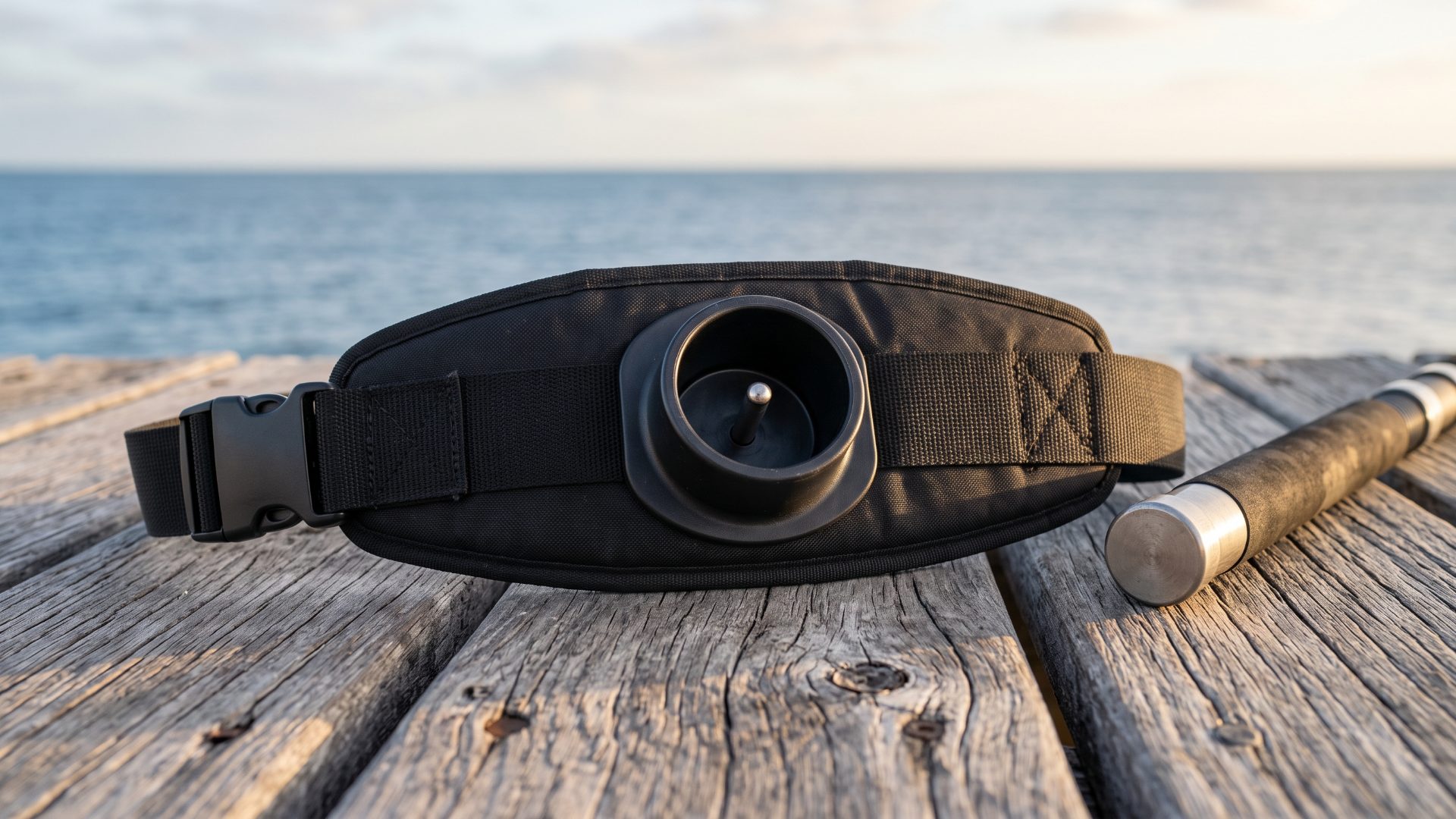
That is the single most useful thing to understand before spending anything. A fighting belt is not padding — it is a fulcrum. It gives the rod butt somewhere solid to sit so you can pivot the rod against your body instead of gripping it against a fish. A harness is the separate, less glamorous piece that takes the resulting load off your back and hangs it on your shoulders and upper spine. Sold separately, marketed separately, and bought separately by most people, who then wonder why long fights still hurt.
Quick Picks
- Best all-rounder: a padded waist belt with a deep pinned gimbal cup — the default for anyone running rods with slotted butt caps.
- Best for plain-butt rods: a pinless deep-cup belt, which grips by cup depth rather than a locating pin.
- Best light option: a slim rod butt pad for jigging, kayak work and casual use where bulk is the enemy.
- Best for long fights: a standup harness and belt kit, where the shoulder straps clip to the reel lugs and unload your back.
- Best for heavy tackle: a kidney-style back harness, built for bent-butt rods and sustained drag pressure from a seat.

How to Choose a Fighting Belt
Start with the rod, not the belt. Pull the butt cap off your heaviest outfit and look at the end of it. If there is a straight notch cut across the cap, you have a gimbal butt and a pinned belt will lock the rod against rotation — the pin sits in the notch and the rod cannot twist when a fish runs at an angle. If the cap is smooth rubber or plain plastic, a pinned belt is the wrong purchase: the pin has nothing to seat into, the rod rolls in the cup under side load, and you spend the fight fighting your own gear. This is the most common mis-buy in the category, and it is entirely avoidable with a ten-second look.
Then think about where the load ends up. The rod is a lever and the cup is its fulcrum, so the force arriving at your body has very little to do with the number on your drag. Set eight kilos of drag, hold the rod at a steep angle, and the load through the belt is a multiple of that, changing constantly as the fish moves and the angle shifts. A belt with a wide, genuinely padded backing spreads that over a hand-span of your hips instead of concentrating it on a strip of webbing. Thin belts are cheap for a reason, and you find out why in the second half of an hour-long fight.
Fit is the part people skip. The cup should sit at hip-bone height, not on the navel — too high and you cannot drop the rod tip to gain line, too low and the whole belt slides down every time you pump. Check the strap length against the way you actually fish: a belt sized for a bare waist can run out of adjustment over a life jacket or wet-weather gear, and finding that out with a fish on is a miserable way to learn. Materials matter less than fit, though moulded plastic cups outlast aluminium anodising in salt, and stainless hardware is worth the small premium over plated steel.
The Belts and Harnesses
Bring up the gimbal belts on Amazon →
The padded gimbal belt with a pin
This is the one to buy first. A moulded cup, a short upright pin, and a broad foam-backed pad on a webbing strap. The pin turns the cup from a rest into a lock, which matters enormously the moment a fish changes direction: without it, the rod tries to rotate and you counter that with your wrists for the rest of the fight. Brands like AFTCO, Black Magic and Braid all build variations of the same sensible idea, and the differences that count are cup depth, pad width and whether the strap has enough tail on it. Look for a cup deep enough that the butt cannot hop out when the line goes slack, which is exactly when most rods get dropped. Comb through the padded gimbal belts and pay attention to how deep the cups run
The pinless deep-cup belt
If your rods wear plain butt caps — and most spin and general-purpose rods do — a pinless belt is the honest answer rather than a compromise. It works by cup geometry: a deep, steeply-walled socket that holds the butt by wrapping it rather than by spearing it. You give up some anti-rotation control, so you will still steer the rod with your hands on hard side-runs, but you keep the fulcrum and the padding, which is where most of the benefit lives anyway. It also stays useful across a whole rack of rods instead of only the ones with notched caps. Trawl the pinless cup belts if your rods run smooth butt caps
The slim rod butt pad
A butt pad is a fighting belt stripped to its purpose: a shaped block of dense foam or rubber on a thin strap, no cup worth the name, no hardware. It exists for people who want protection without bulk — jigging, kayak fishing, anywhere a full belt catches on gear or gets in the way of a seat. Take it for what it is. A pad stops the bruise and gives you a repeatable place to plant the butt, but it does not lock a rod or transfer load anywhere useful, so it fades fast once fights get long. Bought with clear eyes it is genuinely good value; bought as a cheap substitute for a real belt it disappoints. Zero in on the slim butt pads when bulk is the thing you are avoiding
The standup harness and belt kit
Here is the piece that actually changes how a long fight feels. A standup harness is a padded back pad with shoulder straps and two drop straps that clip to the lugs on the reel. Once clipped in, you lean back and your legs and upper back carry the fish, while the belt below simply holds the rod angle. The difference is not subtle: pumping with your legs is sustainable in a way that pulling with your arms and lower back is not. Buy it as a matched kit if you can, because harness drop-straps and belt cup height need to work together — mixing pieces from different systems tends to leave you either clipped too high or reaching for the reel. Match up the standup harness kits and check the drop-strap adjustment
The kidney harness for heavy tackle
A kidney harness wraps low and wide around the lower back and hips, and is built for a different job again: sustained pressure from a seated position with heavy tackle, usually bent-butt rods that never leave a gimbal. Stiff internal panels stop the harness folding into a strap under load, and the whole thing is designed to be worn for an hour without hot spots. It is specialist gear and it is heavy, and for anyone fishing standup with conventional rods a shoulder harness will serve better. If you are running the top end of tackle, though, nothing else spreads that load as well. Narrow the field of kidney harnesses down to the stiffest panelled ones
Comparison
| Type | Where the load lands | Rod butt it needs | Fight length it suits | Buy it when |
|---|---|---|---|---|
| Padded pinned belt | Hips and lower back | Slotted gimbal cap | Up to about 20 minutes | Your rods have notched butts and you want one belt to do everything |
| Pinless deep-cup belt | Hips and lower back | Any plain cap | Up to about 20 minutes | You want one belt that suits a mixed rack of rods |
| Slim butt pad | Front of the hip only | Any | Short bursts | Bulk is the problem and bruising is the only thing you are solving |
| Standup harness kit | Shoulders, upper back, legs | Any, paired with a belt | Long, repeated fights | Fights regularly outlast your lower back |
| Kidney harness | Lower back, spread wide | Bent butt in a gimbal | Sustained heavy pressure | You fish heavy tackle seated and the drag stays high |

Frequently Asked Questions
Do I need a fighting belt for a spin rod?
Usually not. Light spin outfits do not generate enough sustained load to hurt you, and a belt gets in the way of casting and moving. The point where it starts to earn its place is when you are holding a bent rod for minutes at a time rather than seconds — heavier spin outfits throwing metals at speed, or anything where the fish dictates the pace instead of you.
Will a fighting belt work with any rod?
A pinless cup belt will accept essentially any butt. A pinned belt needs a rod with a notch cut in the butt cap, and it is worth checking before buying rather than after. Some rods ship with a plain cap that can be swapped for a gimballed one, which is a cheap fix if you are otherwise happy with the rod.
If I only buy one piece, belt or harness?
The belt. It is the piece that makes the rod usable, it works on its own, and a harness without a belt has nothing to pivot against. Buy the belt now and add the harness when a fight tells you that you need it — you will know, because the ache will be in your back rather than your arms.
Can I use a fighting belt in a kayak?
A slim butt pad, yes, and plenty of people do. A full belt with a deep cup and a harness is awkward in a seated position and, more importantly, adds straps and clips you do not want to be tangled in if you come out of the boat. Keep it simple and keep everything releasable.
Does a belt let me run more drag?
It lets you hold the rod against the drag you already have, which is a different thing. Drag limits come from your line, your knots and the rod, none of which know you are wearing a belt. What changes is that you can hold a good rod angle for longer before fatigue starts making the decisions.
The Bottom Line
Buy the padded belt with the deepest cup you can find that suits your butt caps, get the fit right at hip-bone height, and treat the harness as a second purchase rather than an optional accessory you will never get around to. Anglers who fish light or fish short can stop at a butt pad and lose nothing. Anyone who regularly ends a fight with a sore lower back has already been told by their own body which piece is missing, and it is not more padding at the front.
For more on the gear that sits either side of this decision, our guides to overhead and conventional reels, fishing gaffs and metal lures and jigs cover the outfits and techniques that put a belt to work in the first place.